How Long Do Gel Nails Last? The Honest 2-3 Week Answer (Plus What Changes It)
You book a gel manicure, admire it for a few days, and then spot a chip on your thumb on day six. Was it the polish, the salon, or you? That chip raises the question every gel wearer asks: how long do gel nails last before the first sign of wear?
Here is the short version. Salon gel polish on natural nails lasts 2 to 3 weeks without chipping when it is applied to dry, well-prepped nails and looked after sensibly. Builder gel and Gel-X extensions can reach 3 to 5 weeks. A first set done at home often falls short of the salon range, and one gel brand’s blog puts it at 5 to 10 days.
This guide is research-based. We compared what salon guides, nail brands, and dermatologist-backed articles say, and we point out where they disagree. It is not a product review, we have not tested products ourselves, and it is general information rather than medical advice.
Why the Answers You Read Online Disagree
Search this question and you will see 10 days, 2 weeks, 3 weeks, even 6 weeks. Nobody is exactly lying. They are usually talking about different things.
- One beauty magazine guide quotes an expert at 10 to 14 plus days for gel polish.
- A gel brand blog claims 7 to 14 days for polish alone, and 3 to 4 weeks for hard or builder gel.
- Byrdie says gel manicures typically last 10 days to three weeks, then sums it up as 10 to 20 days.
- A nail polish brand blog (LUXAPOLISH) says 2 to 3 weeks, with real-world variation between day 10 and day 17.
- Polish Pops says 2 to 3 weeks in ideal conditions, and a Fort Myers salon blog splits it into 2 to 3 weeks for natural nails and 3 to 5 weeks for Gel-X or builder extensions.
- One salon guide (shenailsalon) even disagrees with itself: its intro says 2 to 5 weeks, its table says 2 to 3, and its FAQ says 2 to 4.
Three things explain most of the gap:
- Different products. “Gel” can mean soft gel polish, Shellac, builder gel, hard gel, or a gel-effect lacquer that never sees a lamp. Each lasts a different time.
- Different measures. Some writers count the first chip. Others count the day the regrowth gap bothers you.
- Different hands and habits. Dishwashing, hand sanitiser, typing, and nail shape all change the result.
So the number that applies to you depends on your gel type, who applied it, and what your hands do all day. The next sections help you find your own number.
How Long Each Gel Type Lasts
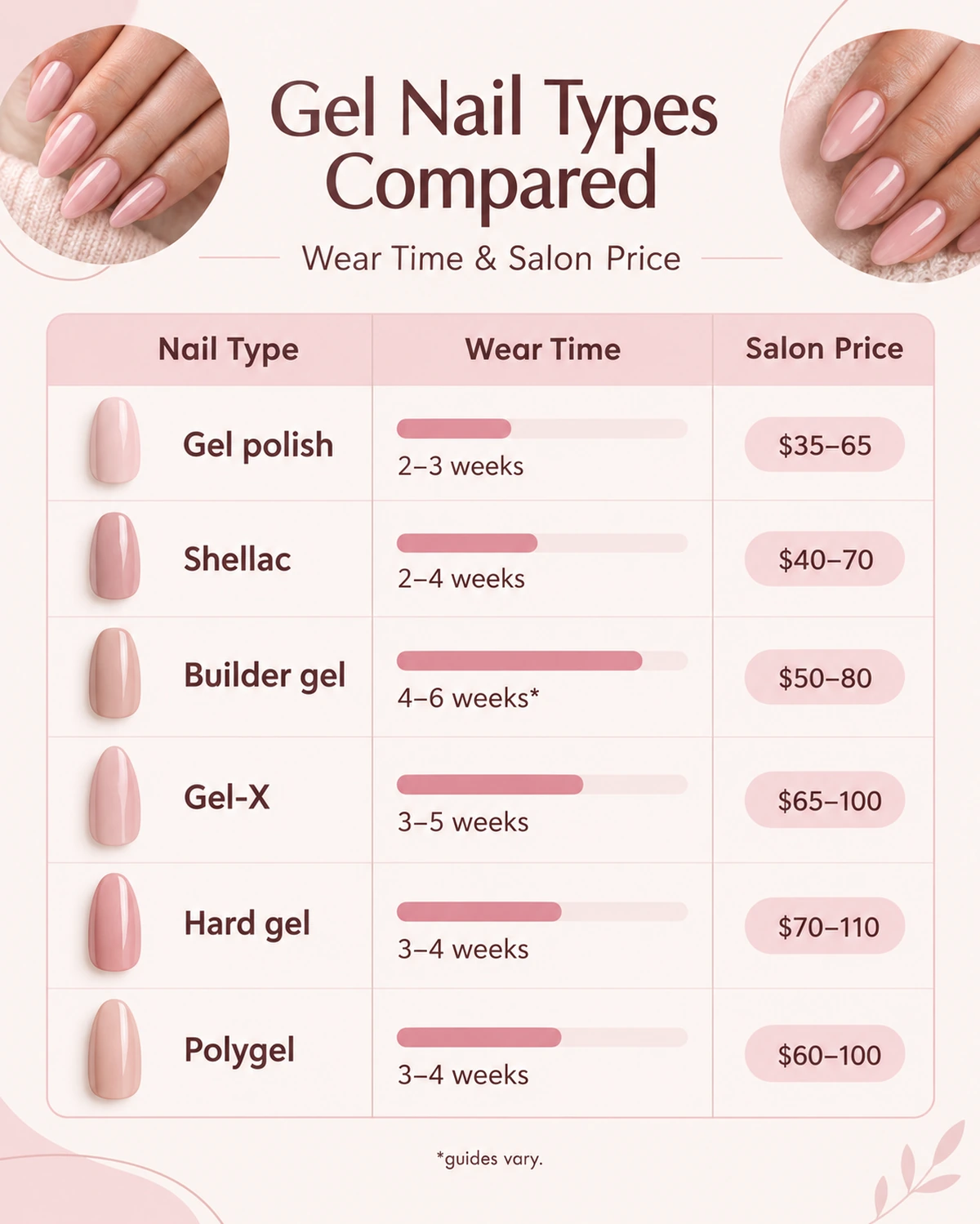
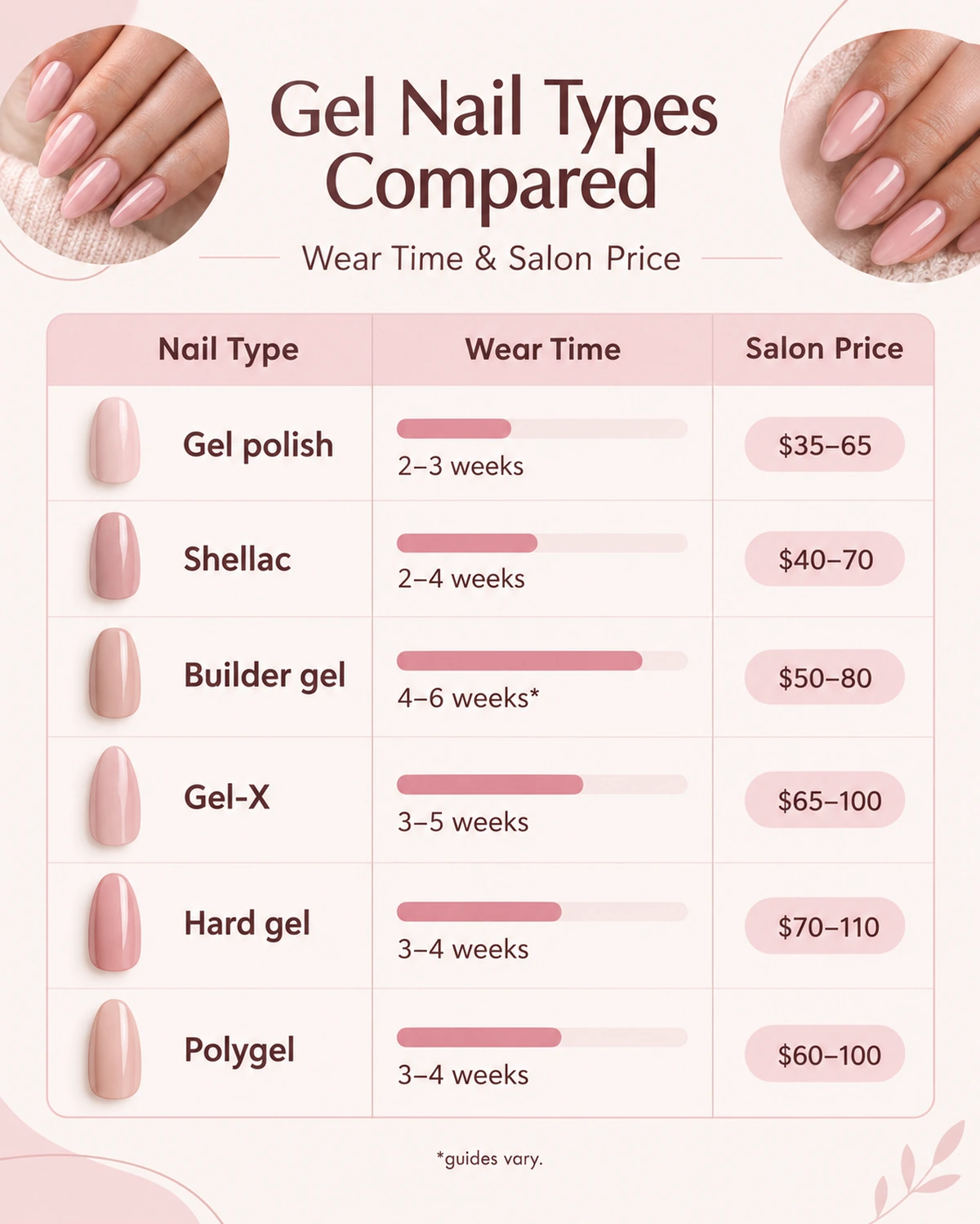
The pattern across salon guides is consistent: soft gel polish wears the shortest, while structural options (builder, hard gel, Gel-X) hold on longer. Prices in the table come from salon guides and are in US dollars; UK readers should treat them as a rough guide since local rates vary.
| Type | Typical wear | Salon price (US) | Best for |
|---|---|---|---|
| Gel polish (soft gel) | 2-3 weeks | $35-65 (DIY kit $40-80) | Natural nails, easy colour changes |
| Shellac (CND brand hybrid) | 2-4 weeks | $40-70 | Fans of a thinner, flexible feel |
| Builder gel (BIAB) | 4-6 weeks in one guide, 3-4 in another | $50-80 | Growing out natural nails, extra strength |
| Gel-X (soft gel extensions) | 3-5 weeks | $65-100 | Added length without acrylic |
| Hard gel | 3-4 weeks | $70-110 | Sculpted shapes, durable overlays |
| Polygel | 3-4 weeks | $60-100 | Length and strength with a lighter feel |
| Semi-cured gel wraps (at home) | 14 plus days | Varies | Low-commitment at-home wear |
For comparison, regular nail polish usually lasts 3 to 7 days on fingernails, and press-on nails run about 5 to 14 days depending on quality and glue. If you are weighing those, our guide to press-on nails walks through application.
A few notes on the table:
- OPI’s published figures give a useful brand-side reference: GelColor for salon use is described at around 3 weeks, the GELement home system at 2 plus weeks of glossy wear, and GELevate builder at roughly 3 weeks in clear shades and 2 plus weeks in colours. The systems are listed on OPI’s official site.
- Shellac figures vary by source. It is a hybrid made by CND, not pure gel, and Byrdie makes the same distinction.
- Semi-cured wraps are stickers you press on and cure under a lamp. They sit in the table for comparison only. We are not recommending a brand.
Which Gel Is Which?
This mix-up explains many disappointed shoppers. Here is the difference in plain terms:
- Real gel polish only hardens under a UV or LED lamp, and it comes out of the lamp already hard with a glossy finish.
- Gel-effect polish is regular lacquer sold as “gel look”. It air-dries and has no lamp step. Expect days, not weeks. Byrdie draws the same line between gel-effect products and real gel.
- Builder gel is thicker and adds structure to the natural nail. Colour often goes on top. OPI describes it as building the nail, while polish adds colour and shine.
- Gel extensions (Gel-X, hard gel, polygel) add length, so they have more leverage working against them but also more structure.
If your “gel” never touched a lamp, it was not gel. That alone can explain a very short wear time. If you keep chipping soft gel by day 10, the better fix is often a stronger system such as builder gel rather than a new polish brand. Our comparison of rubber base vs builder gel helps you pick.
Week by Week: What Normal Looks Like
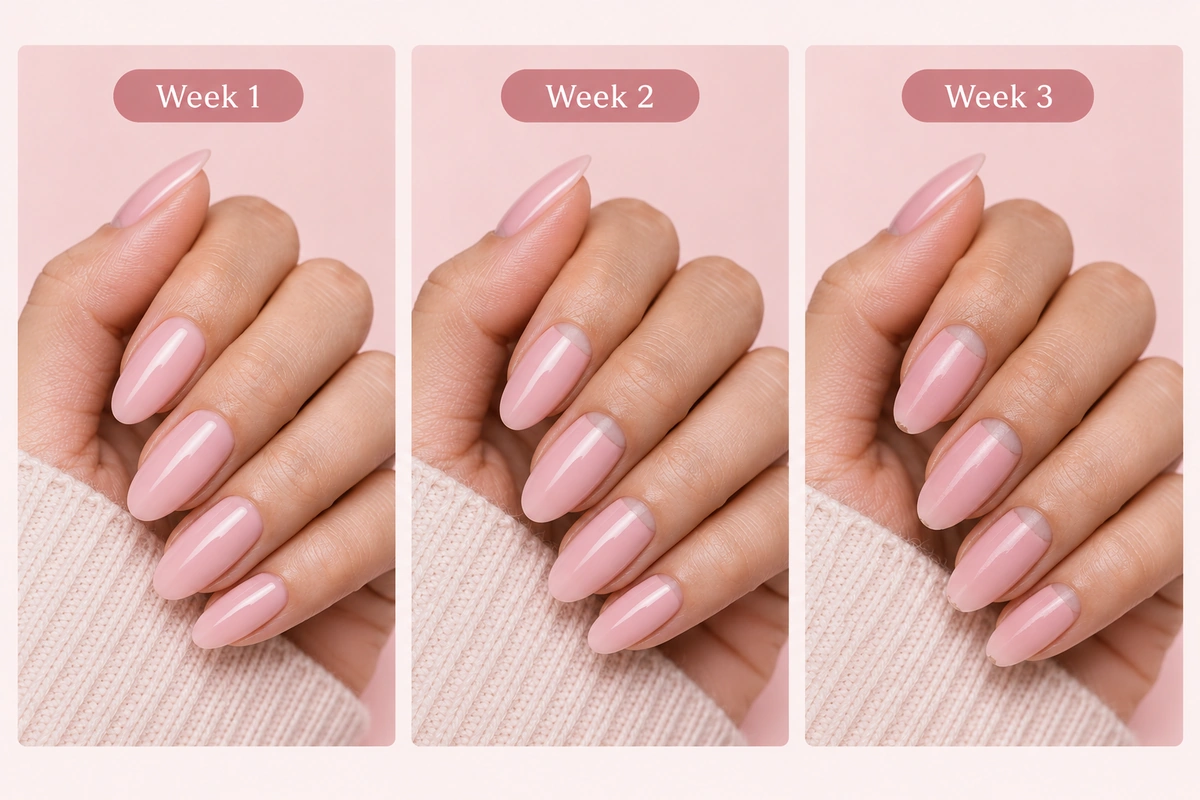
Week 1. The set looks close to new. Glossy, smooth, no lifting. Minor edge wear can start around days 7 to 10, according to one brand guide, but it should be tiny.
Week 2. Nails grow roughly 3mm a month (salon guides give 2.5 to 3.5mm), so a thin gap at the cuticle is normal. The gloss may dull slightly. This is regrowth, not failure.
Week 3. The regrowth gap is clearer and the free edge may show wear. This is your decision point. Salon guides generally suggest a fill or removal at 2 to 3 weeks.
Visual Wear vs Structural Failure
Looks worn is not the same as failed. A dull shine, a small gap at the base, and slight tip wear are cosmetic. Failure looks different: lifting at the edges, cracks, or any sign that water can get underneath. Lifting is where trapped moisture and bacteria can become a problem, so that is the point to act, not just to admire.
What Decides How Long Yours Lasts
Salon guides keep returning to the same few factors.
Prep
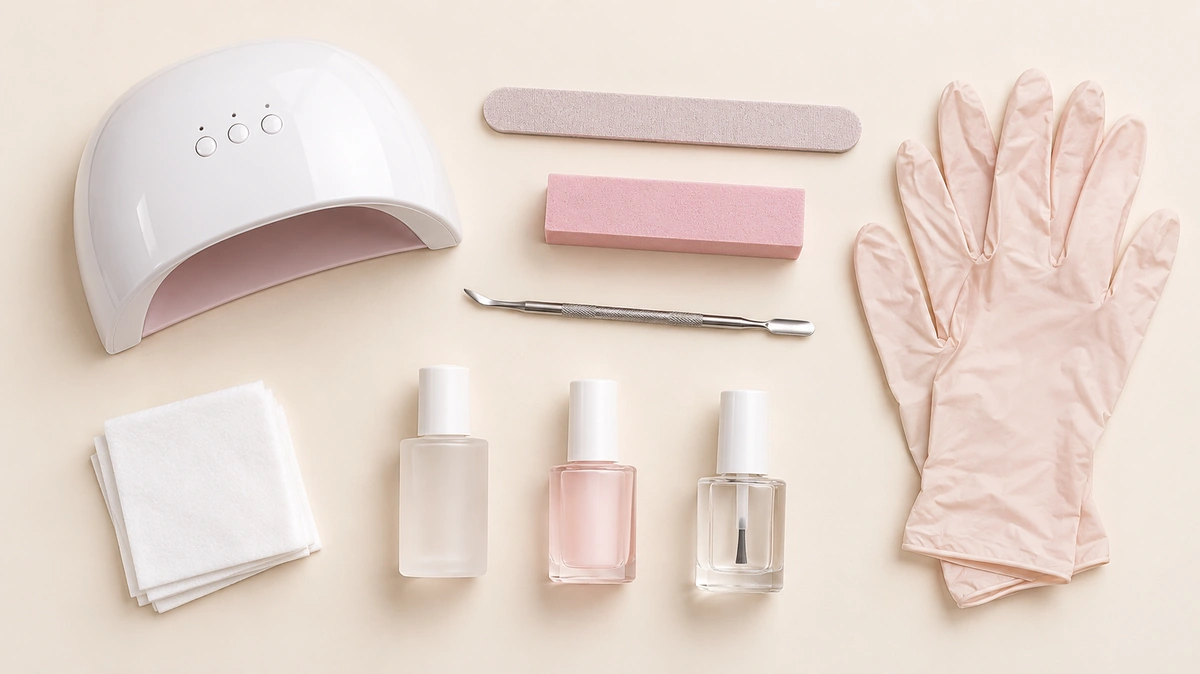
Prep matters more than polish brand, and a nail that is wet or oily when the gel goes on is the usual culprit. Soaking swells the nail plate. The gel cures onto that swollen nail, the nail later shrinks back, and the edges pull away.
If your gel chips within the first week, it is almost never the polish. Ask for dry prep with no soaking. That one change buys most people an extra week.
Nail Biology
- Oily nail beds tend to cause lifting, because gel grips oil poorly.
- Dry nail beds tend to chip sooner, according to Byrdie.
- Thin, flexible nails and rigid nails behave differently under stress, which is why the same polish lasts different times on different people.
Application
Thin coats cure properly. Thick coats can stay soft underneath and flood the skin edges. The free edge (the very tip) also needs to be sealed with the brush so the colour is capped in place.
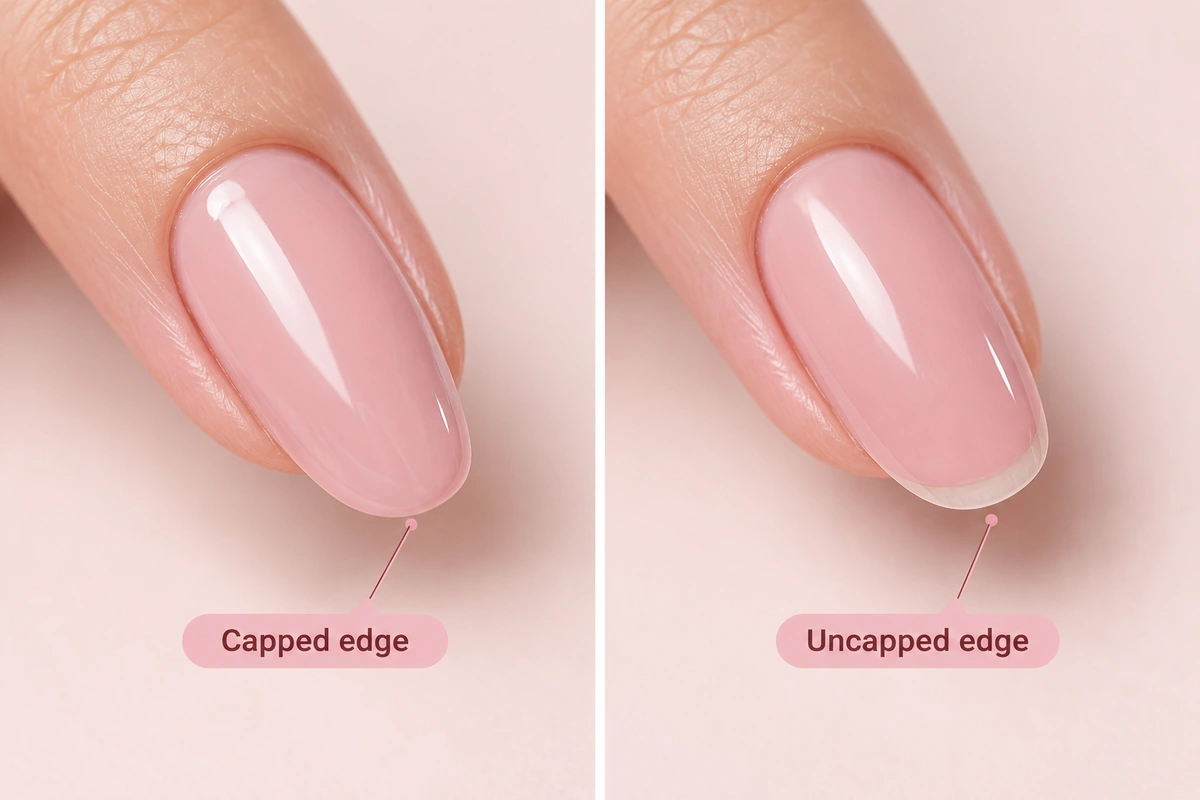
Gel on skin is a bigger problem than a messy look. Product on the skin lifts, and uncured gel on skin is linked to allergies (see the safety section below). Our guide on why gel nails lift from the cuticle covers this in depth.
Shape and Length
Longer nails create more leverage, so they snap or lift sooner. Short nails usually wear the longest, and rounded or oval shapes are gentler than sharp stiletto or coffin shapes. If you want the longest-lasting manicure, go short and softly rounded.
Colour and Finish
| Choice | Longest-looking | Higher maintenance |
|---|---|---|
| Colour depth | Sheer or neutral shades | Dark, high-pigment shades show chips more |
| Finish | Glossy (resists scratches) | Matte shows wear sooner |
Why Did Yours Chip? Diagnose by Location
Where the damage happens tells you the likely cause.
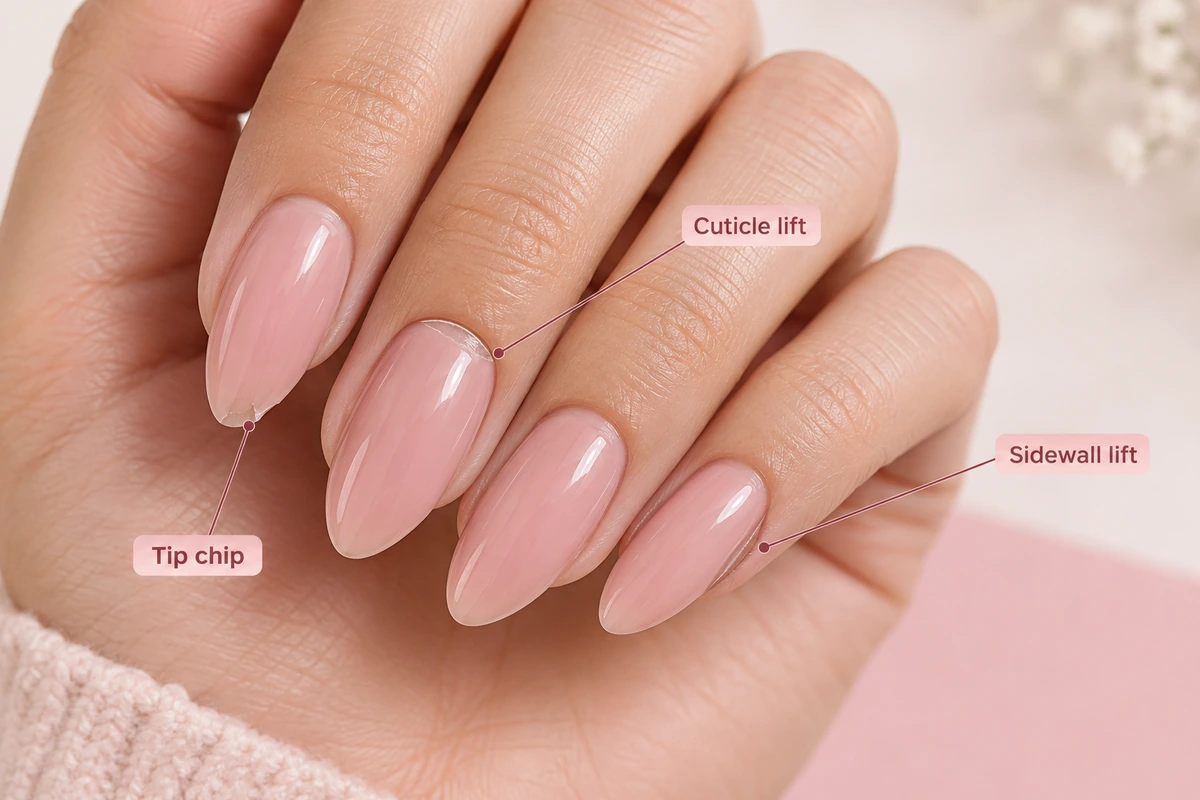
| Where it fails | Likely cause | What to try |
|---|---|---|
| Tip chip | Leverage from length, using nails as tools, an uncapped free edge | Shorter length, cap the edge, use fingertips and not nails |
| Cuticle lift | Oil or moisture on the nail, gel touching skin, rushed prep | Dry prep, dehydrator, keep a thin gap from the skin |
| Sidewall lift | Product flooding the side folds, weak curing | Thinner coats, careful curing, clean up before the lamp |
When the Same Finger Always Lifts First
If one nail fails every time, the problem is probably that nail, not the polish. A nail bed shape or oil pattern can make one finger harder to prep. Habits are worth checking too: the thumb for phone use, the index finger for picking at things, the middle finger for typing or opening cans. Tell your nail tech which finger it is, and ask for extra dehydrating and careful sealing on that nail.
A Chip on Day 3: Save It or Redo It?
- One small chip at the tip: file the edge smooth and reseal with a clear top coat. Sources agree that a single small chip can be patched.
- Several chips, cracks, or a lifting edge: plan to remove and redo. Water can slip under a lifting edge, and leaving it invites more damage and trapped moisture.
- Do not peel a chip or a lifting edge off. Peeling strips layers from your natural nail and sits near the top of the list of damage causes.
Salon vs DIY: How Long Do Gel Nails Last at Home?
| Salon set | First DIY set | Experienced DIY | |
|---|---|---|---|
| Typical wear | 2-3 weeks (OPI GelColor: about 3 weeks) | 5-10 days per one brand blog’s claim | 2 plus weeks with a good home system (OPI GELement: 2 plus weeks) |
| Main risk | Rushed prep | Uneven curing, thick coats, product on skin | Lamp quality, consistency |
| Best tip | Ask for dry prep | Practice thin coats, check the lamp | Keep a consistent routine |
The 5 to 10 day figure comes from a brand with a stake in home products, so treat it as a caution, not a law. The honest takeaway is that home gel can match salon wear, but beginners usually lose time to thick coats, product on skin, and uneven curing from weaker lamps. If you are learning, plan on a short wear time for your first few sets.
Lifestyle: Which Jobs and Habits Chip Gel Fastest?
Gloves are everywhere in this advice, but few guides break it down by lifestyle. Here is a practical map based on what the guides say about water, chemicals, and force.
| Your day | What wears gel down | What to do |
|---|---|---|
| Nursing or hand-washing jobs | Constant water and sanitiser | Expect the shorter end of the range, moisturise often |
| Dishwashing and cleaning | Hot water, bleach, solvents | Wear lined gloves every time |
| New parents | Frequent washing, sanitiser, lifting | Keep nails short, use oil nightly |
| Gym | Gripping weights, sweat | Short nails, wash and dry hands afterwards |
| Desk and typing | Tip leverage on keys | Short length, avoid tapping with the nail |
| Gardening | Dirt, moisture, rough tools | Gloves, always |
| Swimming | Chlorine, long water soaking | Rinse after, oil your cuticles |
Chlorine, hot tubs, and long soaks all push gel to fail sooner. One salon guide also points out that sanitiser and acetone-based products can break down the top coat. In winter, dry air makes nail beds more likely to chip, so oil and cream matter more.
Gel on Toes vs Hands
Toes take far less daily wear than fingers. Salon guides note that regular polish lasts longer on toes than on hands, and gel usually does too. Fewer chips, less water, no typing. That said, tight shoes and long walks can still cause lifting at the tips.
Aftercare That Actually Extends Wear
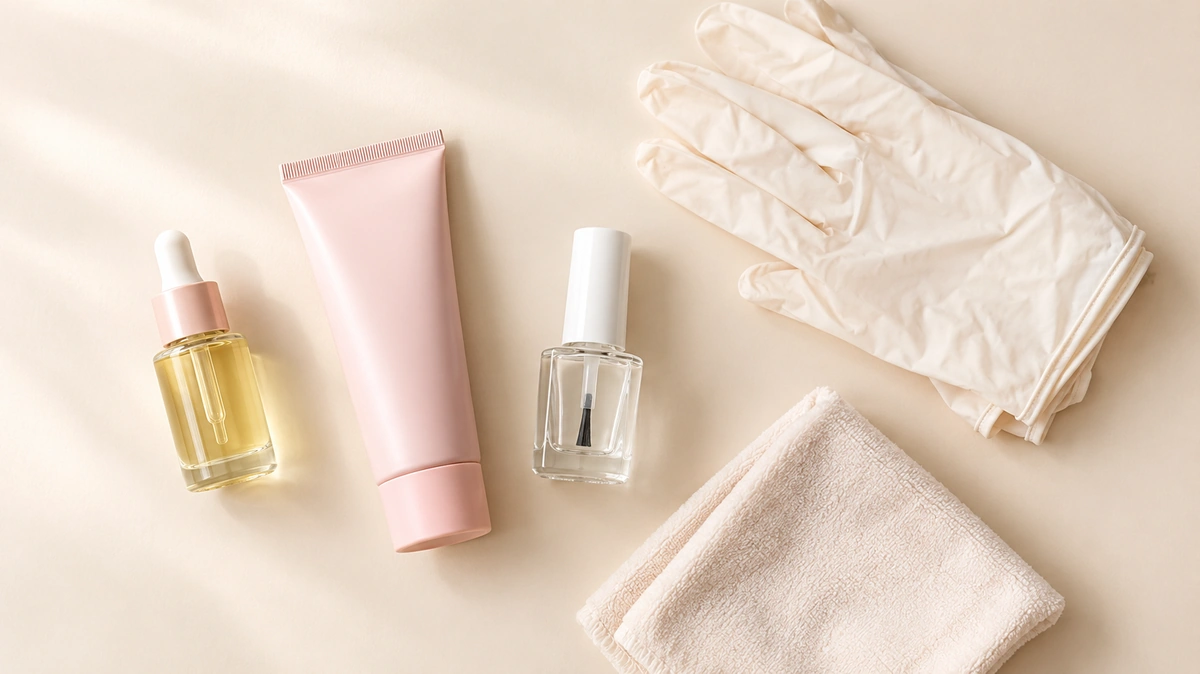
The first 24 hours. Avoid lots of water and hand lotion right after your manicure, as one guide advises. Give the set time to settle.
Every day:
- Apply cuticle oil. A product such as CND SolarOil is one example.
- Put on gloves for washing up, house cleaning, and garden work.
- Use your fingertips, not your nail tips, as tools.
Midweek refresh: go over the set with a clear top coat if your manicure allows it.
Every week, check the edges for lifting. One trick Byrdie mentions is coating the nails with a thin layer of petroleum jelly to lock moisture in, which it calls “slugging”.
Never do this: pick, peel, or pull at a lifting corner.
Shelf-life note: How long gel polish lasts in the bottle varies by brand, and we have no verified figure to quote. Check the bottle and the manufacturer’s own guidance, and store it closed.
Safety: Allergies and UV Light
Gel Allergies and Early Wear Signs
Uncured gel touching skin can lead to sensitisation to acrylates, and HEMA is the ingredient most often named. A beginner guide from Ambedo cites a British Association of Dermatologists warning. This ties to wear time because lifting edges and gel on skin are exactly where problems start.
Red flags include itching, redness, or blistering around the nails. Stop and see a doctor or other professional if you notice them.
UV Lamp Practical Steps
Lamp safety is a calm precaution, not a reason to panic. Dermatologist-backed guidance (such as the guide from Dr. Dana Stern) suggests broad-spectrum SPF 30 plus on hands, fingers, and cuticles, or UPF-rated manicure gloves with the fingertips cut away. Byrdie also cites a 2023 study on UV nail dryers as a reason dermatologists recommend this. The Skin Cancer Foundation offers general UV advice. This is not medical advice, so check with your doctor if you have concerns.
When to Fill, Redo, or Remove
Look for these signs:
- A widening gap at the cuticle
- Lifting at the edges
- Chips or cracks
- Dull, rough finish or lost shine (two guides treat this as a refill trigger)
- Sensitivity or itching (see the safety section above)
| Situation | Best move | Cost and time |
|---|---|---|
| Only regrowth, no lifting | Fill (structural gels) or refresh | Ask your salon for its fill price and how often it suggests one |
| Lifting, cracks, or several chips | Remove and apply a fresh set | Removal about $5-15 (Byrdie), plus a new set |
| Past 3-4 weeks | Remove and reset | Waiting shifts the stress point and raises the chance of a break |
If you remove at home, follow our guide on how to remove gel nails at home without damage.
Breaks and Recovery
Sources conflict. One suggests no more than once a month, another a week or two off every few months, another a lacquer month now and then, another a breather every 3 to 4 sets. The consistent thread is this: remove gel properly, rest occasionally, and use the break to inspect the bare nail for dryness, thinning, or peeling layers. Many guides blame improper removal, not gel itself, for most damage. A couple of weeks of oil and gentle care is a reasonable pause.
What Gel Nails Really Cost
| Cost item | Figure |
|---|---|
| Salon gel polish | $35-65 per visit |
| Visits per year at a 3-week cycle | About 17 |
| Yearly total | Roughly $600-1,100 |
| Removal (when separate) | $5-15 |
| Appointment time | 45 min to 2 hours (LUXAPOLISH: 45 min to 1 hr, Polish Pops: 1-2 hours; art and builder gel take longer) |
| DIY kit | $40-80 one-time, plus polish and remover |
For fills, ask your salon for its fill price and how often it recommends one, then multiply it out. That is your real cost. One spa guide also points out that per smooth day, gel can work out cheaper than lacquer you have to redo twice.
What to Ask Your Nail Tech
- Will my nails be dry before the gel goes on?
- Do you use a dehydrator and primer?
- Will you cap the free edge?
- How long will each coat cure?
- Is a fill or a fresh set better for me?
- Mention the finger that always lifts first.
How long do gel nails last?
With careful application, salon gel polish holds for 2 to 3 weeks without chipping, while builder gel and Gel-X stretch to 3 to 5 weeks.
Why do my gel nails chip or peel after a few days?
Usual culprits are wet or oily nails at prep time, product touching the skin, edges left uncapped, and heavy water exposure. Peeling usually means the gel never bonded to a dry nail, so tell your tech if the same finger lifts every time.
Can gel nails last four weeks?
Some types can, mainly builder gel, hard gel, and extensions. Standard gel polish is usually better removed or refilled by weeks 2 to 3, since waiting longer shifts the stress point and risks breaks.
Can I put regular nail polish over gel?
Yes, you can. Take the regular polish off with a non-acetone remover, since acetone dissolves gel, and use it as a colour refresh; a clear top coat midweek is the simpler touch-up.
Do gel nails last longer on toes than hands?
Usually, yes. Toes face less washing, typing, and gripping than fingers, so polish tends to hold longer on them.
How long do builder gel nails last?
Published guides put it anywhere from 3 to 4 weeks up to 4 to 6 weeks; OPI puts its GELevate builder at about 3 weeks in clear.
Are gel nails okay for nurses and hand-washing jobs?
They can, but nonstop hand washing and sanitiser cut wear short, so plan on the lower end of the range, moisturise often, and watch for itching or redness.
How often should I redo my gel nails?
Book every 2 to 3 weeks, or sooner once you notice lifting, cracks, or dull, rough patches.
The Bottom Line
Gel nails typically last 2 to 3 weeks, and the best way to get there is dry prep, thin coats, a sealed free edge, and gentle habits. If your set keeps failing early, check the location of the damage and the type of gel before changing brands. Keep removal gentle, give your nails the occasional break, and treat itching or redness as a reason to stop. For designs that hold up through the full wear cycle, see our Y2K nails guide for 25 throwback looks.