How to Remove Press-On Nails at Home
Press-on nails look like a salon set, so it is tempting to rip them off the second one lifts. Pulling them off can peel layers from your natural nail, leaving thin, sore and weak nails behind. Press-ons are also called stick-on, fake or artificial nails, and they are not acrylics, which are sculpted onto the nail and removed differently. This guide explains how to remove press-on nails at home safely, for adhesive tabs, nail glue and UV-cured gel glue, without hurting your natural nails. Always follow the method for your adhesive and take your time.
Quick answer: Soak your fingertips in warm soapy water until the adhesive loosens, then lift the press-on from the side. Tabs need 10 to 15 minutes, glue needs 15 to 20 minutes with oil or 10 to 15 minutes with acetone, and gel glue needs filing plus an acetone soak. Never pull or pry a press-on off.
New to wearing them? Our guide to applying press-on nails explains how adhesive choice affects removal later.
First, Identify Your Nail Adhesive
The right removal method depends on what is holding the nail on, so check the adhesive before you soak anything. Most sets use tabs, regular nail glue, or UV-cured gel glue.
| Adhesive | How to spot it | Typical wear | Best removal | Reuse chance |
|---|---|---|---|---|
| Adhesive tabs | Double-sided stickers, pre-applied or separate; edges lift first | Up to 7 days | Warm soapy water, 10 to 15 minutes | Best of the three |
| Regular nail glue (cyanoacrylate) | Liquid glue from a brush or tube; edges feel sealed | Up to 14 days | Warm water and oil, then acetone if stubborn | Uncertain |
| UV-cured gel glue | Hard, thick layer cured under a UV or LED lamp; usually on clear tips | Varies | File, then acetone soak-off | Unlikely |
| Mixed | Some nails on tabs, some on glue, or glue dots plus tabs | Varies | Treat each nail by its own adhesive | Varies |
Wear times follow OPI’s guidance, which says tabs hold up to 7 days and glue up to 14. UV-cured gel glue is generally used with clear tips, because UV light cannot pass through solid opaque press-ons, according to Beetles. Water and oil will not release cured gel, so do not treat it like regular glue.
If you have a mixed set, soak everything in warm water first, then use oil or acetone only on the glued nails.
Timing matters too. A set near the end of its wear comes off more easily, while a fresh glue set in its first day or two is the hardest to remove, so expect a longer soak.
Three rules of damage-free removal:
- No prying. Slide the nail off, don’t pop it off.
- Pain means stop. Soak again before trying once more.
- No rushing. Five more minutes of soaking beats one second of pulling.
My honest opinion: tabs are the better pick for beginners. Removal is gentler and the set stays more intact, so glue is only worth it when you truly need a full week or more of wear.
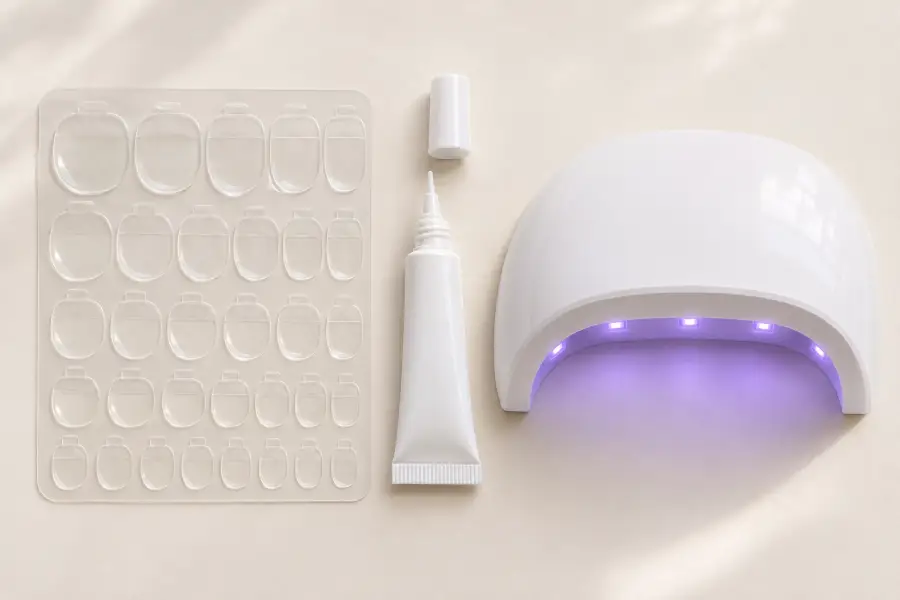
What You’ll Need
You need a few basic supplies, and the list changes slightly depending on your adhesive. Everything here is cheap and usually already in your bathroom or kitchen.
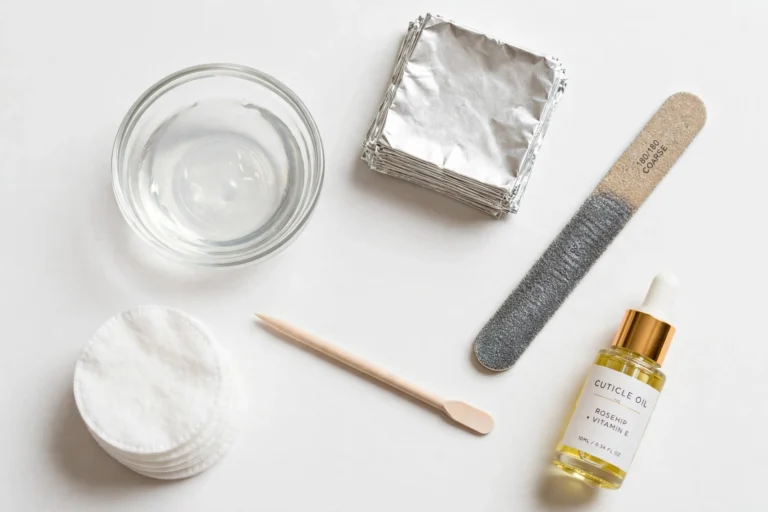
Basics: a bowl, warm water, dish soap, cuticle oil (olive or coconut oil works too), a wooden orange stick, a soft buffer, cotton pads, hand cream and petroleum jelly.
- Tabs: bowl, soap, wooden stick and oil.
- Glue: all of the above, plus pure acetone, foil and petroleum jelly.
- UV gel: the glue list, plus a nail file and a cuticle pusher.
How to Remove Press-On Nails With Adhesive Tabs
Tabs are the easiest adhesive to remove: soak in warm soapy water, then peel from the side. When they are cooperating, the whole job takes 10 to 15 minutes.
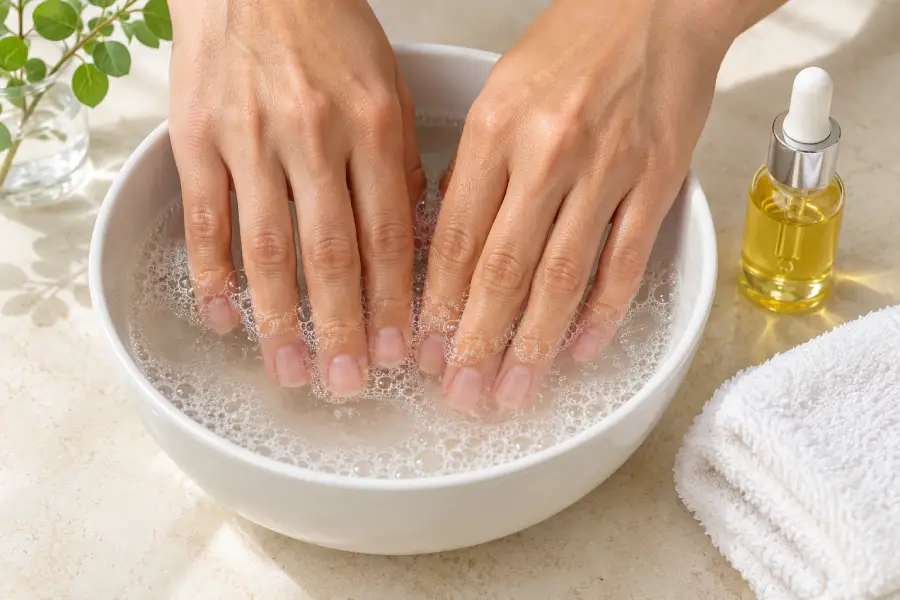
- Fill a bowl with warm water and add a squirt of dish soap. You can add a little oil as well.
- Soak your fingertips until the water cools and the edges begin to lift.
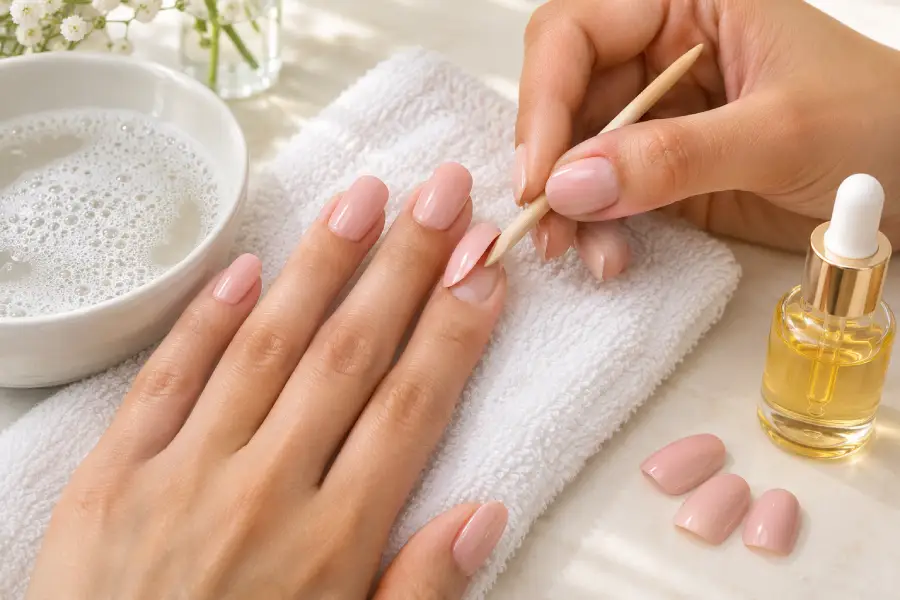
- Peel each nail gently from the side. Use a wooden stick to help if an edge is stubborn.
- Roll leftover adhesive off with a fingertip, or gently file it so it forms a small ball and lifts away, as imPRESS recommends.
The water should be warm, like a comfortable bath, not hot. Hot water does not dissolve adhesive faster, it can irritate your skin, and it can warp the nails.
If a tab is stuck, dab acetone remover around the edges, wait one minute, then peel. Olive & June suggests a longer 10 to 15 minute soak and a re-soak if needed.
Tabs also suit anyone who wears press-ons for a day or two, since warm water makes full daily removal easy. imPRESS nails are not reusable according to the brand, because they distort during removal. Rigid press-ons in good condition may survive.
If you remove press-ons for wudu, tabs are the practical choice: they come off with warm water in minutes, and you can reapply the same set afterward.
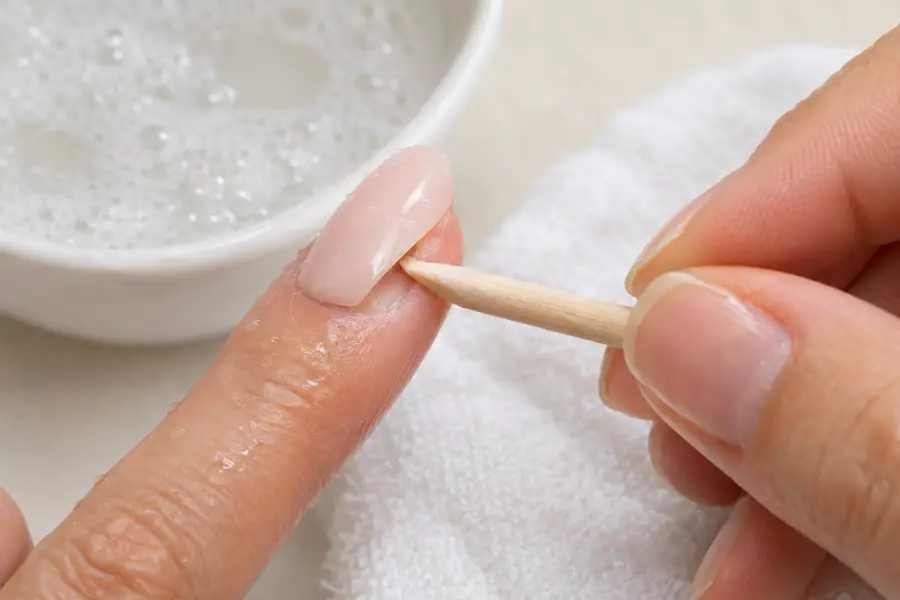
How to Remove Glue-On Press-On Nails
For glued-on nails, start with a warm water and oil soak, then move to acetone only if the glue will not let go. This applies to regular nail glue, not UV-cured gel.
Oil and warm water (no acetone):
- Soak in warm water with soap and a tablespoon of cuticle, olive or coconut oil.
- Around 15 to 20 minutes is typical. That is an estimate, because no brand publishes an oil-soak time.
- Test by rocking a nail gently side to side. If it resists, soak five more minutes instead of forcing it.
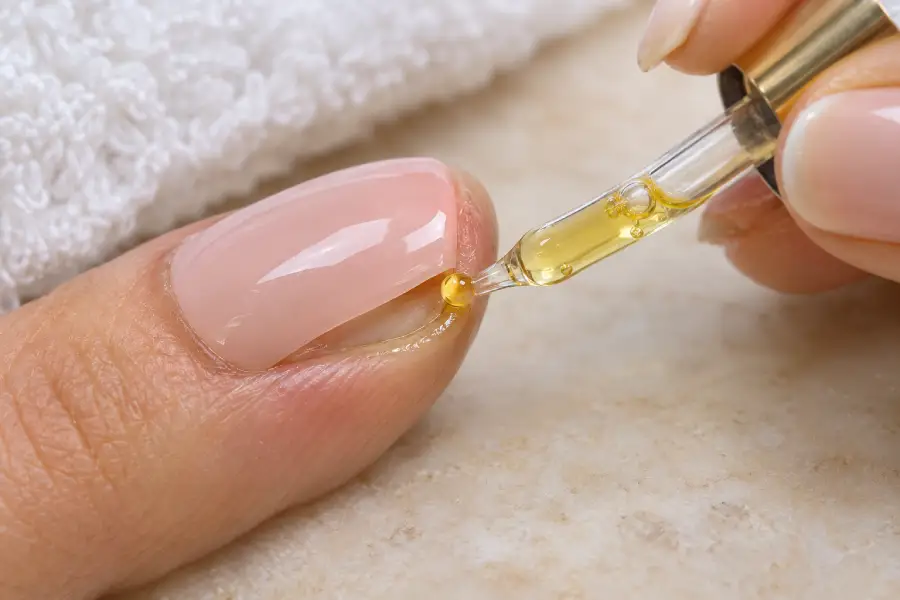
- Add oil drops under any lifted edges, lift with a wooden stick from the side, then buff residue gently in one direction.
Oil helps loosen the bond and adds slip, but it does not dissolve glue.
Acetone (for stubborn glue):
- Lightly file the top coat so acetone can reach the glue.
- Rub petroleum jelly around the skin of each nail, as a buffer.
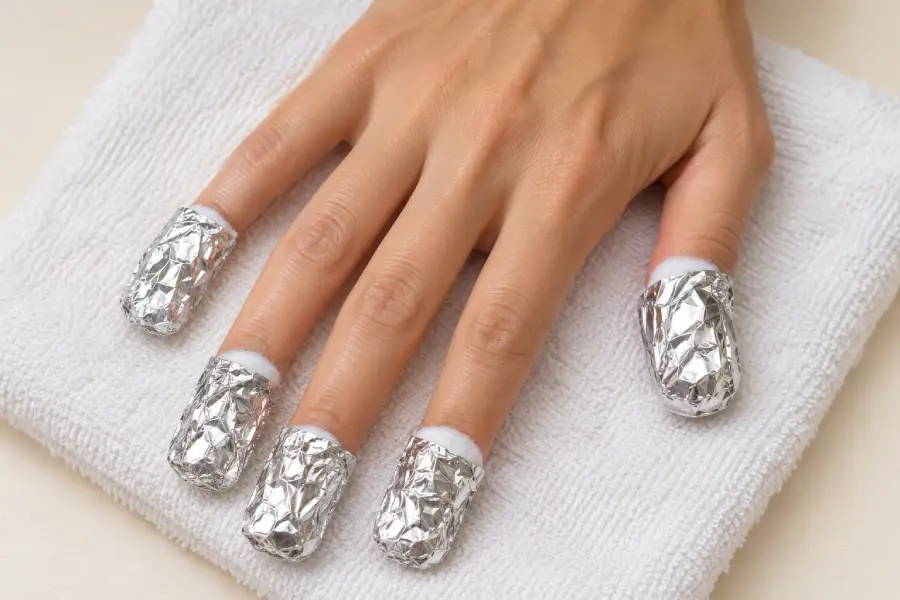
- Wrap a cotton pad soaked in pure acetone around each nail with foil for 10 to 15 minutes, in a ventilated room, away from flames.
- Lift the softened nail with a wooden stick, then wash and moisturize right away.
Acetone ends any chance of reusing the set and dries out skin. If you want to soak off other enhancements safely, see our guide on how to soak off nail enhancements safely.
Brand instructions (each brand’s own, not universal):
- KISS: trim and file the surface, use Glue Off remover or an acetone soak until soft, lift with a manicure stick, then wipe off residue.
- OPI xPRESS/ON: soak in warm water for 10 minutes, put a little acetone at the nail base with a cotton swab, then lift with a cuticle stick.
- Glamnetic: add 1 to 2 drops of its remover and wait 5 to 7 minutes, or soak in warm water for 10 minutes with cuticle oil drops.
UV-Cured Gel Glue: A Different Removal
If your adhesive was cured under a UV or LED lamp, it is gel glue, and it needs its own method. You will usually see a thick, hard layer, most often on clear tips.
Following Beetles’ instructions: file off the top coat, soak in acetone for around 10 minutes with a foil wrap (the kit listing says at least 15), then gently scrape the softened gel with a cuticle pusher. Finish by buffing lightly and applying cuticle oil. Warm water and oil will not release cured gel. Always follow the product’s own directions, and use its dedicated remover if it has one.
Can You Remove Press-On Nails Without Acetone?
Yes, often. Warm water, oil and patience work fully for tabs and can work for mild glue. This route suits sensitive skin, anyone without acetone at home, and anyone hoping to save the set.
There are honest limits, though. Strong or professional-grade glue and UV-cured gel will not fully release without acetone. In those cases you need acetone or a professional. Acetone-free removers are also slower, so plan for extra soaking time and keep testing gently rather than forcing a nail.
What If Your Press-On Nails Won’t Come Off?
If a nail will not budge, soak it again for another 5 to 10 minutes and test once more. Never force it. If it still resists, move to an acetone wrap or see a professional.
A half-lifted nail should never be pulled. Soak it and remove it fully. These mistakes cause most of the damage:
- Peeling from the top or center instead of the side edges.
- Soaking too little.
- Using hot water, which warps press-ons and does not loosen adhesive faster.
- Skipping cuticle oil.
- Over-buffing afterward.
- Using metal tools, scissors or knives.
- Sliding floss or any lever under the nail to force it off.
When to stop: pain, bleeding, the natural nail lifting, or signs of infection mean you should stop, not force it, and see a salon professional or clinician.
A salon removal of press-on nails typically costs about $10 to $20 in the US, based on salon menus and pricing guides, and prices vary. Removing them yourself costs almost nothing beyond supplies you already own.
Super glue and glue on skin. Never use household super glue on nails, since it is not made for skin contact. ANSES warns that wet cyanoacrylate touching cotton or wool can release intense heat and cause burns, so never wipe a liquid glue spill with cotton pads, tissues or clothing.
A fresh spill and routine removal of cured glue are different situations. For glue on skin, wash with warm soapy water, then loosen it with oil or petroleum jelly, as Poison Control advises. Use acetone only on small areas of intact skin, away from the face and eyes, and never pull bonded skin apart. For glue in the eyes or mouth, a large spill, a burn, or a child involved, call Poison Control at 1-800-222-1222 (US) or get medical help.
Fixing a nail that tore during removal? See fixing a broken natural nail at home.
Removing Leftover Glue and Aftercare
Once the nails are off, buff leftover adhesive gently in one direction, then give your nails some care. Small stubborn spots can be touched with an acetone swab.
Wash your hands, apply cuticle oil to all ten nails, and follow with a rich hand cream. Keep applying oil once or twice a day for the next few days. If your nails feel healthy, you can reapply right away. If they feel thin or look peeled, give them 3 to 7 days of oil and a strengthener first, and expect recovery to vary from person to person.
Watch for white spots, thinning, peeling layers, pain or sensitivity. Daily cuticle oil, a strengthening base coat and regular rest days all help. The American Academy of Dermatology suggests a one to two week break from polish so nails can repair, and recommends seeing a dermatologist for persistent problems. A fingernail takes at least six months to fully regrow, according to the Cleveland Clinic, which is why a rushed removal costs more time than it saves.
For weak nails, read about strengthening options for weak natural nails.
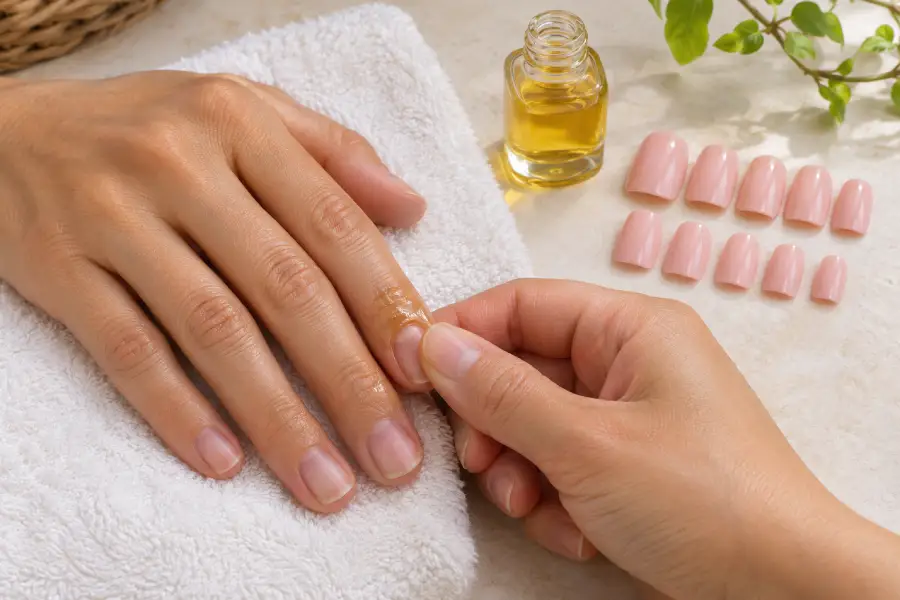
Can You Reuse Press-On Nails?
Sometimes. Tabs give the best chance, glue makes reuse uncertain, and acetone removal usually rules it out. It also depends on the condition of the nails afterward.
Brands differ. imPRESS nails are not reusable. Pink Gellac’s glue pads are reusable, though its glue is not guaranteed. Glamnetic says it cannot promise reuse. OPI suggests peeling or scraping residue and avoiding a full acetone soak.
To reuse a set, peel off the old adhesive, clean the underside with alcohol, let it dry fully, and store the nails in order in their original tray. For more on reapplying, see our press-on application guide.
FAQs
How do you remove press on nails at home?
Soak your fingertips in warm soapy water for 10 to 15 minutes for tabs, or around 15 to 20 minutes with a little oil for glue. Once the adhesive softens, lift each nail gently from the side with a wooden stick. Never pull or pry dry.
How do you remove press on nails without acetone?
Often you can. Soak in warm soapy water with a spoonful of cuticle or olive oil, add oil drops under lifted edges, and lift gently from the side. This works fully for tabs and often for mild glue. Strong glue or UV gel usually needs acetone.
How long do you soak press on nails to remove them?
Adhesive tabs usually need 10 to 15 minutes in warm water. Nail glue takes around 15 to 20 minutes with oil, which is an estimate, so rock the nail gently to test. If it resists, soak five more minutes. Acetone usually needs 10 to 15 minutes under foil.
Does acetone damage press on nails?
Acetone can ruin press-ons for reuse, since it dissolves the glue and can affect some finishes. It also dries out skin and nails, so protect your skin with petroleum jelly and moisturize afterward. Use it only when oil and warm water fail to release the nail.
How do you remove press on nails without damaging your natural nails?
Never peel or pry. Soak until the adhesive softens, lift from the side with a wooden stick, and stop if you feel pain. Finish with cuticle oil and hand cream. Patient removal minimizes damage risk, though no method can guarantee zero damage.
Can you reuse press on nails after removing them?
It depends on the adhesive and the condition of the set. Tabs come off cleanest, so those sets reuse best. Glue residue can be cleaned off the underside, but acetone usually damages the finish, so acetone-removed sets rarely reuse well.
How do you remove press on nails applied with nail glue?
Soak in warm soapy water with oil for about 15 to 20 minutes, add oil under lifted edges, and lift gently from the side. If the glue still holds, use acetone on cotton under foil for 10 to 15 minutes.
Can you remove press on nails with just water?
Warm water alone often works for adhesive tabs, as long as you soak long enough and lift from the side. It can also loosen mild glue, but strong glue usually needs oil or acetone.
What removes nail glue?
Acetone dissolves nail glue, which makes it the most reliable option for stubborn bonds. Oil does not dissolve it. Oil only loosens the bond and adds slip, so pair it with a long warm soak. Dedicated glue removers from nail brands are another option.
How do you take off press-on nails without nail polish remover?
Use warm soapy water, a spoonful of cuticle oil, olive oil or coconut oil, and patience. Soak, add oil drops under lifted edges, and lift with a wooden stick. This suits tabs and mild glue. Strong glue may still need acetone or a salon visit.
The Bottom Line
Learning how to remove press-on nails is mostly about patience. Identify your adhesive, soak until it softens, lift from the side, and finish with oil and a little care. Skip the pulling, and your natural nails will thank you. My honest opinion: a slow soak with a podcast on beats any shortcut, because five calm minutes costs far less than months of regrowing a damaged nail.