
Benefits of Collagen: 7 Skin & Joint Benefits Explained
Collagen is everywhere right now. In your coffee, in your skincare aisle, all over your feed. But what’s actually true and what’s just marketing?
Here’s the deal: collagen IS the most abundant protein in your body. It’s in your skin, bones, cartilage, tendons – basically holding you together. And as you age, your body makes less of it. That’s real.
So do the supplements actually do anything? Let’s look at what the research really says about the benefits of collagen. No hype, no miracle promises.
What Even Is Collagen?
Think of collagen as your body’s scaffolding. It’s a structural protein that gives strength to your skin, cartilage, tendons, and bones.
Your body makes it from amino acids and nutrients in your food. But production slows down over time, and the collagen you have changes structure. That’s one reason skin starts looking different as you age.
1. Skin Hydration: One of the Most-Studied Benefits of Collagen
This is one of the most studied benefits of collagen, and honestly? There’s something to it.
Several clinical trials found that hydrolyzed collagen supplements improved skin moisture compared to placebo. Sounds great.
But – and this is important – a 2026 systematic review found that while many studies reported improvements, a lot of them had quality issues. High risk of bias, in research-speak.
So: promising, not proven. Keep that in mind for everything below.

2. May Improve Skin Elasticity
It is your skin’s ability to bounce back after stretching.
A 2023 meta-analysis looked at 26 randomized controlled trials with 1,721 people total. Result? Improvements in both hydration and elasticity compared to placebo.
Not bad. But results vary a lot depending on the specific supplement, dose, how long people took it, and how the study was designed. One product’s results don’t guarantee another’s.
3. May Support Skin’s Appearance
Since collagen is naturally in your skin, it makes sense that beauty brands put it in everything.
Some studies show improvements in wrinkle measurements, hydration, and elasticity. But when researchers filter for only the highest-quality studies? The evidence gets shakier. Funding source matters too – industry-funded studies tend to look more positive. Shocking, I know.
Bottom line: think of collagen as a possible helper, not a guaranteed anti-aging fix.
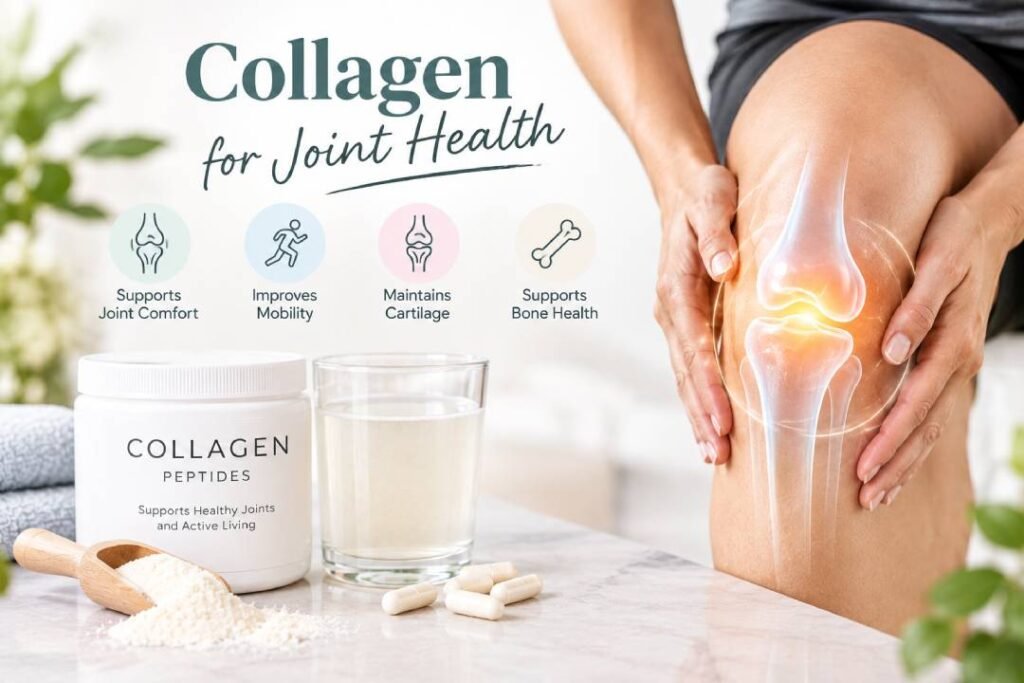
4. May Support Joint Health
This one’s actually got decent research behind it, especially for knees.
A 2024 meta-analysis of randomized trials with 870 participants found that collagen supplements improved pain and function in people with knee osteoarthritis.
Another 2024 analysis – 35 trials this time – found small-to-moderate improvements in pain and function, with no more side effects than placebo.
That’s genuinely encouraging. But “small-to-moderate” is the key phrase. It’s not a miracle cure, and it doesn’t replace actual medical treatment.
5. Supports Your Connective Tissues
This one’s less about supplements and more about basic biology. Collagen IS connective tissue. Tendons, ligaments, cartilage, skin – it’s all built on collagen.
Research on whether TAKING collagen helps these tissues is still growing. The evidence is stronger for some areas (skin, joints) than others (bones, muscles). We’re still learning.
6. May Complement a Healthy Aging Routine
Here’s what nobody selling collagen wants to emphasize: no supplement works alone.
Healthy aging is the boring stuff. Balanced diet. Moving your body. Sleeping enough. Sunscreen every day. A skincare routine that actually suits your skin.
Collagen might be one piece of that puzzle. It’s not the whole picture, not even close.
7. Collagen and Hair Health
Collagen gets marketed hard for hair. Thicker, shinier, faster-growing – you’ve seen the ads.
The reality? The evidence for hair benefits is way thinner than for skin or joints. Hair growth depends on genetics, hormones, nutrition, overall health – a whole complicated system. No powder is overriding all of that.
If you’re dealing with serious hair shedding, skip the supplements and talk to a doctor. There could be something going on that needs real attention.
Where Does Collagen Come From?
Different products, different sources:
- Bovine (cow)
- Marine (fish)
- Porcine (pig)
- Chicken
Most supplements use hydrolyzed collagen – also called collagen peptides. Hydrolysis breaks it into smaller pieces that dissolve better in drinks and are easier to formulate.
The source matters less than the label being honest about what’s actually in there.
Collagen Peptides vs. Regular Collagen: What Is the Difference?
Peptides are just smaller fragments. That’s it. They’re what you’ll find in most powders, capsules, and drinks.
Most of the skin research? Done on hydrolyzed collagen/peptides, not whole collagen. So if you’re buying for skin benefits of collagen, peptides are what the studies actually tested. For a clinician-reviewed overview, see Cleveland Clinic’s guide to collagen peptides.
Compare the actual collagen content per serving, not the marketing on the front.
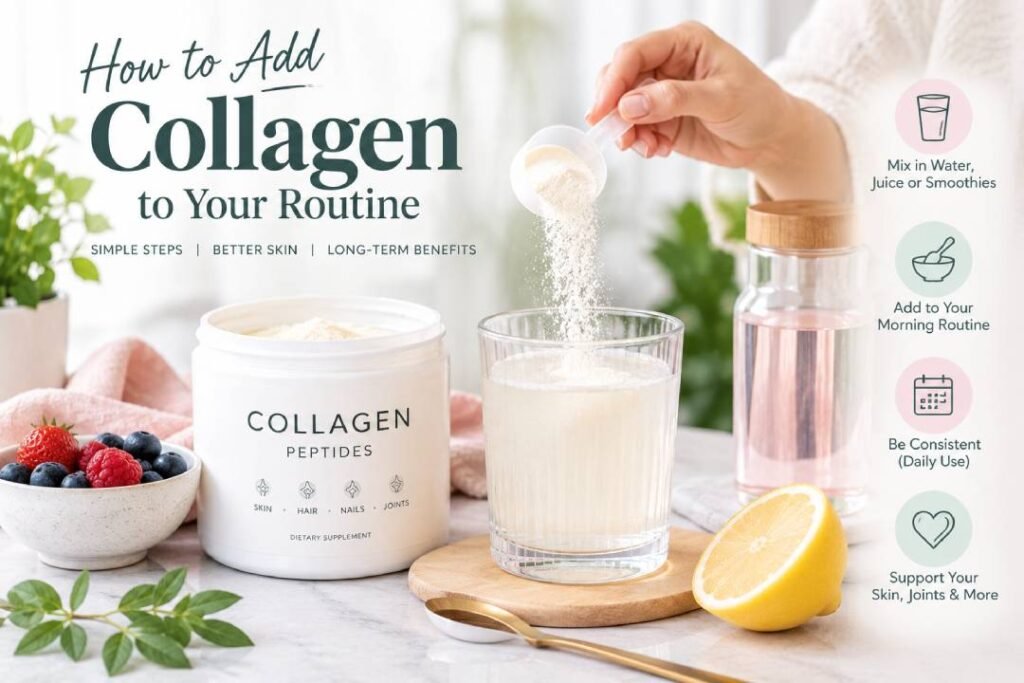
How to Add Collagen to Your Routine
If you decide to try it, follow the serving size on YOUR product. They all differ.
Powders usually mix into: water, smoothies, coffee, tea, yogurt.
And don’t forget food. Fish, eggs, dairy, legumes, meat – all give you the amino acids your body uses to make its own collagen.
A supplement doesn’t replace eating well. Ever.
What to Look for in a Collagen Supplement
Type and source – the label should clearly say what kind and where it’s from. Vague = suspicious.
Ingredient list – short and clean is good. Watch for unnecessary additives.
Amount per serving – how much collagen are you actually getting? Some products are mostly filler.
Quality testing – look for brands that share info about manufacturing and third-party testing. Supplements aren’t tightly regulated, so transparency matters. The NIH Office of Dietary Supplements offers guidance on evaluating supplement labels and quality.
Are There Any Downsides to Collagen Supplements?
Generally well-tolerated in studies. But some people get digestive discomfort. The taste can be not great. Allergies matter – collagen can come from fish, shellfish, chicken, cattle, or pigs. Check the source if you have food allergies. Pregnant, breastfeeding, on medication, or managing a condition? Talk to your doctor first. Always.
How Long Does Collagen Take to Work?
No guaranteed timeline. Studies used different doses for different durations. Some reported skin changes after several weeks to a few months.
Think long-term nutritional support, not quick fix. If you’re expecting results in a week, you’ll be disappointed.
Collagen and Skincare: Do You Still Need a Routine?
Yes. Obviously yes. The benefits of collagen supplements don’t replace gentle cleansing, moisturizing, daily sunscreen, and targeted products. Sun protection especially – UV damage is one of the biggest drivers of premature aging. No powder fixes that.
New to building a routine? Our guide to layering skincare products in the right order walks you through morning and night steps, and this winter skincare routine for beginners keeps things simple when skin gets dry.
Frequently Asked Questions About Collagen
What are the main benefits of collagen?
The best-studied ones: skin hydration, skin elasticity, and joint pain/function in knee osteoarthritis. Evidence quality varies.
Does collagen actually improve skin?
Some studies say yes for hydration and elasticity. But higher-quality reviews raise concerns. Not a guaranteed anti-aging treatment.
Is it good for joints?
Research suggests it may help pain and function in knee osteoarthritis. Results vary. Doesn’t replace medical treatment.
Is marine collagen better?
Not enough evidence to say one source is best for everyone.
Can it replace a healthy diet?
No. Supplements give you specific peptides. They don’t replace balanced nutrition.
Final Thoughts
Collagen’s interesting. The research on skin hydration, elasticity, and joint health shows real promise. But it’s not equally strong for every claimed benefit of collagen, and some recent reviews have flagged quality concerns.
If you try it, treat it as one small part of a bigger picture. Good food, movement, sleep, sunscreen, skincare – those are the foundations. Collagen’s just a possible bonus on top.