Vitamin C Serum for Pigmentation: 7 Powerful Benefits & Uses
What Is Vitamin C Serum?
Vitamin C Serum for Pigmentation products are not all formulated in the same way. Vitamin C is also known as ascorbic acid, although it may be found in skincare products in other forms or derivatives.
Vitamin C is a common ingredient in skincare products because of its antioxidant properties. It may also help support a more even and luminous complexion. Topical vitamin C has been studied for pigmentation and photoaging.
People searching for Vitamin C Serum for Pigmentation are generally looking for products that may help make dark spots or marks less visible. Vitamin C may influence melanin production, which is why it has been studied as a pigment-reducing ingredient.
However, vitamin C should not be considered an instant solution for dark spots. A 2023 systematic review found that topical vitamin C could have depigmenting properties, but it also noted that more research was needed and that results may take time to become noticeable.
It is better to view vitamin C as one part of an anti-pigmentation skincare routine rather than a miracle ingredient. Sun protection, gentle skincare, and choosing products your skin can tolerate are also important.
If pigmentation persists, changes rapidly, becomes painful, or is difficult to identify, professional medical advice should be sought.
How Vitamin C Affects Pigmentation
Vitamin C may affect pigmentation by influencing processes involved in melanin production. Melanin is responsible for most of the color found in hair, skin, and eyes. Darker pigmentation may occur when the skin produces excess melanin in response to UV light or inflammation.
Vitamin C has been studied as a pigment-reducing agent. Research suggests that vitamin C may interfere with processes involved in the production of melanin.
Vitamin C also acts as an antioxidant. UV radiation and environmental stress can contribute to oxidative skin damage. Antioxidant serums may therefore be a useful part of a skincare routine.
However, vitamin C serum is not a replacement for sunscreen. Vitamin C can provide antioxidant support, but it does not provide the same protection as sunscreen.
Can Vitamin C Serum Help With Dark Spots?
Vitamin C Serum for Pigmentation can help reduce the appearance of skin pigmentation; however, the results are dependent on a number of factors. These include the type of pigmentation, the vitamin C formulation, concentration, stability, how often you use it, and how well your skin is protected from the sun.
Researchers have highlighted limitations in the available studies and differences between vitamin C formulations.
Pigmentation does not usually occur for one specific reason. One person may develop dark marks after acne, while another may experience sun-related pigmentation, melasma, or another skin condition.
It is important to address the underlying trigger. For example, if new pigmentation continues to develop because of unprotected sun exposure, vitamin C alone may not be enough.
Vitamin C Can Help With Different Types of Pigmentation
Vitamin C has been studied for concerns such as hyperpigmentation, melasma, and photodamage.
A 2023 systematic review of seven published studies involving 139 participants found improvements in treated skin based on objective assessments. The researchers concluded that topical vitamin C showed anti-pigmenting effects, while also noting that more research was needed.
Post-inflammatory hyperpigmentation is another common concern. It can occur when dark spots remain after acne, irritation, or another form of inflammation.
The evidence for pigmentation treatments varies, but sunscreen has repeatedly been emphasized in research on post-inflammatory hyperpigmentation. Broad-spectrum sunscreens with SPF 30 or higher were advised in many studies included in a systematic review of topical treatments.
A practical skincare routine may combine a well-tolerated antioxidant such as vitamin C with regular sun protection and appropriate care for the underlying skin concern.
Benefits of Vitamin C Serum for Pigmentation
Vitamin C Serum for Pigmentation can help improve the appearance of dark spots and uneven skin tone when used consistently.
Brightens Uneven Skin Tone
Vitamin C may help support a more radiant and even-looking complexion. Skin can appear uneven when pigmentation occurs, especially when dark spots develop after sun exposure or acne.
Vitamin C may help reduce the appearance of excess pigmentation while providing antioxidant support. Clinical literature has reported both photoprotective and antipigmentary properties for topical vitamin C.
The term “brightening” should not be understood as changing the natural color of your skin. The goal of a skincare routine focused on pigmentation is to improve skin evenness and reduce discoloration rather than bleach the skin.
Aggressive attempts to lighten the skin can cause irritation, and irritation may contribute to worsening pigmentation.
Helps Protect Skin From Environmental Damage
Vitamin C is a popular antioxidant in skincare products and has been studied for its potential to protect skin from environmental damage. Topical vitamin C has antioxidant, anti-aging, and antipigmentary properties.
However, antioxidants do not allow you to skip sunscreen. UV exposure remains an important factor in pigmentation and photoaging.
A practical morning routine can include gentle cleansing, a suitable treatment, moisturizer if needed, and broad-spectrum sunscreen.
Which Vitamin C Is Best for Pigmentation?
Vitamin C Serum for Pigmentation products are not all formulated in the same way.. L-ascorbic acid is used in some products, while other vitamin C derivatives, such as magnesium ascorbyl phosphate, may be used to improve stability.
Pure ascorbic acid can be unstable, which can create challenges with formulation and storage. Research reviews have also highlighted the stability problems associated with topical vitamin C.
There is no single vitamin C product that is best for everyone. Skin sensitivity, formulation, packaging, and concentration are all important factors.
Beginners should not choose a vitamin C serum based only on the percentage listed on the label. A formulation that the skin can consistently tolerate may be a more practical choice.
L-Ascorbic Acid
L-ascorbic acid, also known as vitamin C, is widely studied in dermatology. Its effects on pigmentation, photoaging, and antioxidant activity have been researched.
L-ascorbic acid can have stability issues, so formulation and packaging can be important.
Beginners should also remember that a higher percentage does not automatically mean better results. A product that causes irritation may be difficult to use consistently.
Vitamin C Derivatives
Vitamin C derivatives were developed to address some of the problems associated with ascorbic acid, including instability and formulation difficulties.
Magnesium Ascorbyl Phosphate is one vitamin C derivative discussed in scientific literature. Research into vitamin C derivatives is ongoing, and the clinical evidence may differ between individual ingredients and products.
A well-formulated derivative may be an option for people whose skin is easily irritated. The goal is not necessarily to find the strongest product, but to find one that provides useful benefits while remaining comfortable enough to use consistently.
How to Use Vitamin C Serum for Dark Spots

Choosing a suitable Vitamin C Serum for Pigmentation is important, but using it correctly is also important.
Beginners may benefit from a simple routine rather than using several active ingredients at the same time. Apply vitamin C serum after cleansing with a gentle cleanser.
If your skin needs it, apply moisturizer and then use sunscreen during the day.
Simple Morning Routine
- Gentle cleanser
- Vitamin C serum
- Moisturizer
- Broad-spectrum sunscreen
A product that your skin can tolerate is more important than simply choosing a high concentration.
Reduce or discontinue use if your skin becomes persistently itchy, dry, or irritated.
Morning Skincare Routine With Vitamin C
Morning skincare routines often include vitamin C because it is an antioxidant and can be used alongside sun protection.
A simple morning routine with Vitamin C Serum for Pigmentation can support a more even-looking complexion.
After completing your morning skincare routine, sunscreen is especially important. Research on post-inflammatory hyperpigmentation supports the use of sunscreen, and SPF 30 or higher is commonly recommended.
Keep in mind that pigmentation can be stubborn. Dramatic results after only a few days are unlikely. The 2023 systematic review on topical vitamin C for photoaging and melasma noted that longer-term use may be needed before noticeable results appear.
Vitamin C, Sunscreen, and Serum
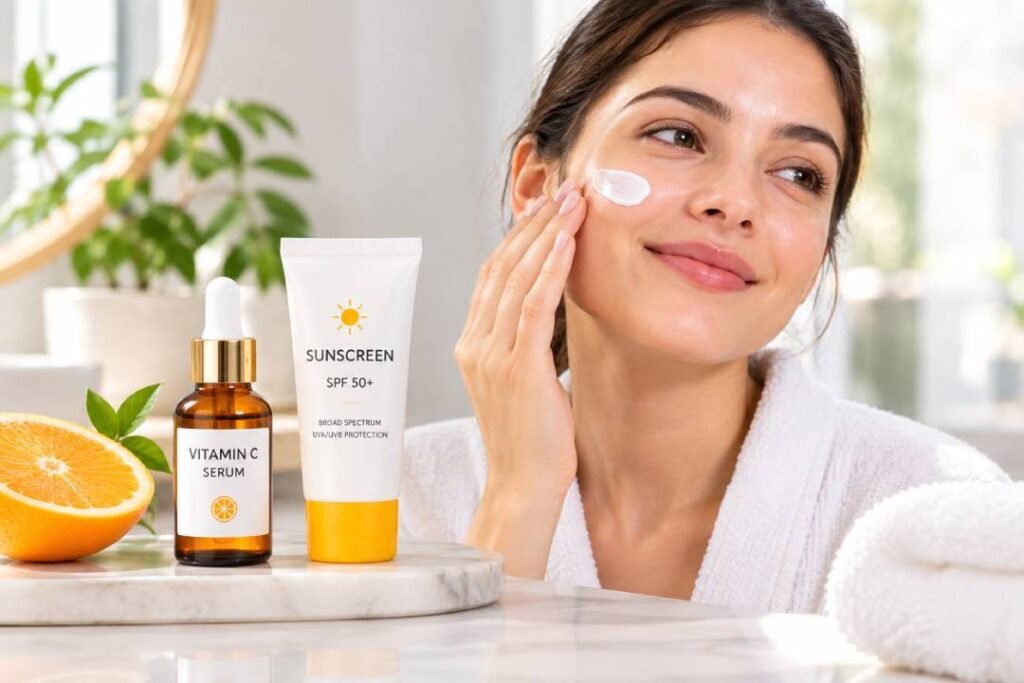
Using Vitamin C Serum for Pigmentation with daily sunscreen can help support your skincare routine.
Sunscreen should not be considered optional if pigmentation is your main concern. Continued UV exposure can work against your efforts to achieve a more even-looking skin tone.
For more information on fading dark spots, see the American Academy of Dermatology’s guide to fading dark spots.
Vitamin C is an antioxidant, but it does not provide the same protection as sunscreen.
Choose a broad-spectrum sunscreen with SPF 30 or higher if you are focusing on pigmentation. Use it regularly. If you spend a lot of time outdoors, follow the directions provided by the sunscreen manufacturer.
Sun protection is especially important when treating pigmentation after inflammation. Research on post-inflammatory hyperpigmentation has frequently recommended broad-spectrum sunscreen with SPF 30 or higher.
Comparing Vitamin C With Other Ingredients for Pigmentation
Vitamin C is not the only ingredient studied for improving the appearance of pigmentation. Other ingredients, including niacinamide, retinoids, hydroxy acids, and hydroquinone, have also been studied for pigmentation concerns.
| Ingredient | Common Skincare Purpose | Important Consideration |
|---|---|---|
| Vitamin C | Brightening and antioxidant support | Tolerance and formulation stability are important |
| Niacinamide | Supports the skin barrier and helps improve uneven skin tone | Results can vary between individuals |
| Retinoids | Support skin cell turnover and may help improve pigmentation | Can cause irritation, especially when first introduced |
| Hydroxy Acids (AHAs) | Exfoliation and improving uneven skin texture | Overuse may cause dryness or irritation |
| Hydroquinone | Pigmentation treatment | Should be used carefully and appropriately |
| Sunscreen | Protects skin from UV-related damage | Important for preventing pigmentation from worsening |
It is not necessary for everyone to combine all of these ingredients. Beginners may benefit from keeping their routine simple.
Start with a basic skincare routine and introduce one active ingredient at a time. This makes it easier to see how your skin responds and may reduce the risk of irritation.
Common Mistakes to Avoid
One common mistake is using too many active ingredients at the same time.
Someone may use vitamin C, an exfoliating acid, retinoids, and several other brightening products because they want faster results. Excessive irritation can make a skincare routine difficult to tolerate and may worsen the appearance of pigmentation.
Another mistake is ignoring product stability. Ascorbic acid can be unstable, and researchers have highlighted the challenges involved in stabilizing topical vitamin C formulations.
Do not judge a pigmentation treatment after only a few days. Dark spots can take time to improve, and the cause of pigmentation also matters.
A dermatologist can help determine the type of pigmentation if it is severe, persistent, or rapidly changing.
What Should You Expect From Your Results?
Vitamin C Serum for Pigmentation does not have a universal timeline for improving pigmentation. It may take time before some people notice whether their dark spots are becoming less visible.
Evidence suggests that consistent, longer-term use may be needed to see noticeable changes in pigmentation.
Results can also depend on whether new pigmentation is continuing to develop. For example, someone who has dark spots but remains exposed to the sun without protection may not see much progress.
Similarly, if acne or ongoing skin irritation continues to cause new marks, treating existing pigmentation alone may not solve the problem.
Think of pigmentation improvement as a gradual process rather than an overnight transformation. Consistency, suitable products, sun protection, and patience are important.
Final Thoughts
Vitamin C Serum for Pigmentation can be a useful addition to a skincare routine, particularly for people concerned about uneven skin tone, dark patches, or signs of photoaging.
Topical vitamin C has been studied for its antioxidant and antipigmentary properties. A 2023 review reported findings related to pigmentation and photoaging, although the available evidence remains limited and formulations vary. Researchers have also highlighted the need for more clinical research.
Beginners do not necessarily need the strongest serum. Choose a well-formulated product, introduce it gradually, keep your routine simple, and use broad-spectrum SPF 30 or higher throughout the day.
When pigmentation is the main concern, sunscreen remains an important part of the routine.
FAQs
1. Do Vitamin C Serums Provide Results for Pigmentation?
Vitamin C may help with pigmentation by reducing the appearance of dark spots and supporting a more even-looking complexion. Some studies have reported antipigmentary effects, but more research is needed to determine the most effective formulations and concentrations.
2. What’s the Best Way to Get Rid of Dark Spots With Vitamin C?
Vitamin C may help reduce the appearance of dark spots, but results can vary depending on the cause of pigmentation, product formulation, consistency of use, and sun protection.
Sunscreen is also important because continued UV exposure can contribute to pigmentation.
3. How Often Can I Use Vitamin C Serum?
Many vitamin C products can be used regularly. However, individual tolerance varies.
If you have sensitive skin or are new to vitamin C, introduce the product gradually and follow the instructions provided with the product.
4. When Should I Use Vitamin C?
Vitamin C serum is commonly applied in the morning after cleansing and before moisturizing.
The final step in your morning skincare routine should include broad-spectrum sunscreen.
5. Do I Need Sunscreen When Using Vitamin C Serum?
Yes. Vitamin C does not replace sunscreen.
When you are trying to manage pigmentation, sun protection is especially important because UV exposure can contribute to discoloration. Broad-spectrum sunscreen with SPF 30 or higher is commonly recommended.
6. What’s Better for Pigmentation, Vitamin C or Niacinamide?
Vitamin C and niacinamide have different properties and may be useful for different skincare concerns.
The most suitable option can depend on your skin type, sensitivity, the cause of pigmentation, and the product formulation.
7. Can Vitamin C Make Pigmentation Worse?
Vitamin C is generally used to support more even-looking skin rather than worsen pigmentation.
However, an irritating product or an overly aggressive skincare routine may cause skin irritation. Stop using a serum if it causes persistent redness, burning, or irritation, and reconsider the product or routine.
8. When Does Vitamin C Fade Pigmentation?
There is no universal timeline for pigmentation improvement.
Results can take time and may depend on the cause of pigmentation, product formulation, consistency of use, and sun protection. Noticeable changes may take longer than a few days or weeks.