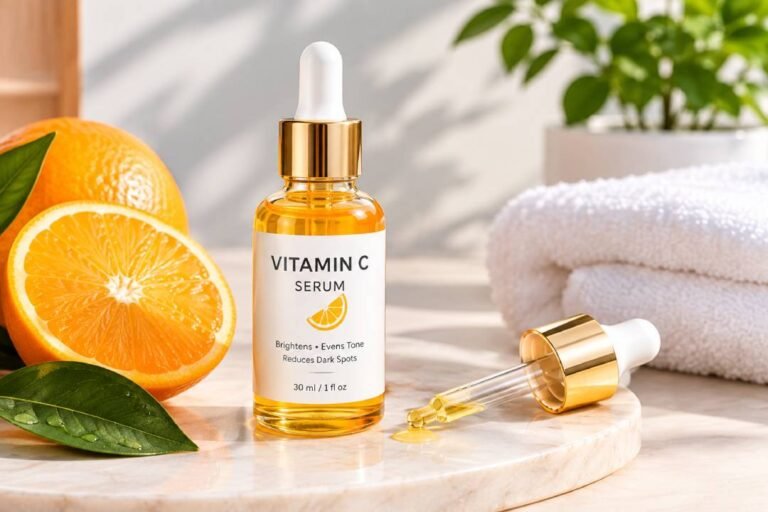
How to Use Vitamin C Serum for Beginners, Step by Step
Vitamin C serum can be a useful addition to your skincare routine, but knowing which formula to choose, how much to apply, and what goes on before and after it can feel confusing at first. You might also wonder whether you need an expensive serum or if using it every morning is safe for your skin. If you are new to this and wondering how to use vitamin C serum without irritating your skin, this guide covers the whole process, from choosing a starter formula to building a routine you can keep.
The good news is that a beginner’s routine does not need to be complicated. Start with a suitable formula, introduce it gradually, moisturize, and finish with sunscreen. You do not need several new products or a high concentration to get started.
This guide explains how to use vitamin C serum step by step, how to choose a formula for your skin type, and how to build a comfortable four-week morning routine. It also covers common mistakes, storage, and when to expect results.
5-Step Vitamin C Routine in 30 Seconds
If you want the simplest answer to how to use vitamin C serum, follow this morning routine.
Step 1: Cleanse
Wash your face with a gentle cleanser to remove overnight oil, sweat, and residue.
Step 2: Dry your skin
Pat your face dry with a clean towel. Dry skin is a sensible starting point, particularly if you have sensitive skin.
Step 3: Apply vitamin C serum
Start with the amount on the product label, often around 2 to 4 drops for the face. Spread a thin, even layer and avoid the eyes.
Step 4: Moisturize
Apply a moisturizer that suits your skin type. Allow the serum to settle first if needed.
Step 5: Finish with sunscreen
Apply broad-spectrum SPF 30 or higher as the final skincare step before makeup. Follow the sunscreen label for the correct amount and reapplication.
For your first few weeks, use vitamin C on two or three mornings per week rather than immediately adding it to every morning. Increase frequency only if your skin tolerates it.
The main rule: introduce one new active product at a time, and do not push through burning, persistent redness, or irritation.
What Does Vitamin C Serum Do, and What Does It Not Do?
Vitamin C is an antioxidant used in skincare. If you are learning how to use vitamin C serum, it helps to know first what the product actually does. Topical formulas can help protect skin from oxidative stress caused by environmental factors and may improve the appearance of uneven tone and some dark spots over time.
Results depend on the formula, its stability, how regularly you use it, and your skin.
Potential benefits of vitamin C serum
- Brighter-looking skin: It may help improve the appearance of dullness and uneven skin tone.
- Dark spots: Some formulas can help fade the appearance of certain types of hyperpigmentation with consistent use.
- Antioxidant support: Vitamin C helps neutralize free radicals, which can contribute to skin damage.
- Support for collagen formation: Vitamin C has a role in normal collagen production. The visible effect of a topical serum on firmness varies, and dramatic changes should not be expected.
For more detail, read our guide to how vitamin C helps with dark spots and pigmentation.
What vitamin C serum cannot do
Vitamin C serum is not a substitute for sunscreen, and it cannot prevent every cause of skin ageing or pigmentation. It will not erase deep wrinkles, remove all dark spots, or produce identical results for everyone.
It is also not a treatment for every skin condition. Persistent pigmentation, painful acne, or a rash may need professional assessment rather than additional skincare products.
A realistic goal: think of vitamin C as one part of a consistent skincare routine, not a quick fix that must transform your skin within a few days.
Choose Your Starter Serum: Percentage and Formula by Skin Type
The best vitamin C serum for a beginner is one you can use consistently without causing irritation.
Two important decisions are the vitamin C concentration and the form of vitamin C in the formula. A higher percentage is not automatically better for every person.
What percentage of vitamin C should a beginner use?
Concentration guidance varies by formula and skin tolerance. The following table is a practical starting point, not a guarantee of results or a universal medical rule.
| Label concentration | What beginners should know |
|---|---|
| Around 5% | A lower concentration may be a reasonable starting point for people concerned about sensitivity. |
| Around 10% | A common starter strength in many beginner formulas; a reasonable step up once a lower percentage feels comfortable. |
| Around 15% | A stronger option that may suit some experienced or tolerant users, but can irritate others. |
| Around 20% or higher | Not necessary for every beginner. Higher concentrations may increase irritation without guaranteeing better visible results. |
These ranges are most useful when comparing products that use the same form of vitamin C. Percentages are not directly interchangeable across every derivative or formula.
L-ascorbic acid vs vitamin C derivatives
L-ascorbic acid is the direct form of vitamin C most often discussed in skincare. It is well studied but can be unstable in some formulations and may sting, especially at higher concentrations.
Vitamin C derivatives are alternative forms designed to offer different formulation or stability properties. Examples include sodium ascorbyl phosphate, magnesium ascorbyl phosphate, and ascorbyl glucoside. Their performance depends on the specific ingredient, concentration, and finished product.
Do not assume every derivative is gentler or equally effective. Look for a clearly labelled formula from a reputable manufacturer rather than choosing based on the ingredient name alone.
Which vitamin C serum suits your skin type?
| Skin type | What to look for | Beginner tip |
|---|---|---|
| Dry skin | A formula with moisturizing ingredients, such as glycerin or hyaluronic acid | Apply moisturizer afterward and avoid formulas that leave your skin tight. |
| Oily skin | A lightweight serum with a comfortable finish | Choose a texture that layers well and does not feel excessively greasy. |
| Combination skin | A balanced, lightweight formula | Monitor dry areas separately from the oilier parts of your face. |
| Sensitive skin | A lower-concentration formula or a well-formulated derivative | Patch-test carefully and start less frequently. |
| Acne-prone skin | A simple formula that suits your existing routine | Introduce it separately from other new acne treatments so you can identify irritation. |
Skin type alone cannot determine the ideal vitamin C form or concentration. Your skin’s tolerance, current products, and the product’s full formulation also matter.
My editorial recommendation: For a beginner, a lower-percentage, stable derivative serum used every morning beats a strong 20% L-ascorbic acid serum used inconsistently, because a routine you can tolerate daily will always outperform a stronger formula your skin forces you to stop.
The important point is consistency without irritation, not chasing the highest number on the label.
Patch-Test Your Vitamin C Serum Before Using It on Your Face
A patch test can help you identify signs of irritation before applying a new product to a larger area. It cannot guarantee that you will never develop a reaction, but it is a useful precaution.

How to patch-test vitamin C serum
- Choose a small area. Use a small patch of skin on your inner forearm or another suitable area recommended by the product manufacturer.
- Apply a small amount. Follow the product’s patch-testing instructions. Do not apply the serum to broken, scratched, or irritated skin.
- Leave it as directed. Follow the label for whether to leave the product on or wash it off. If the instructions do not specify a testing period, ask a pharmacist or dermatologist for advice rather than assuming one short test is conclusive.
- Watch for a reaction. Check for redness, itching, swelling, persistent stinging, or a rash during the test period.
- Stop if irritation develops. Wash the product off if directed or if a reaction occurs. Do not proceed to facial use if the test area reacts.
Some reactions can take longer to appear, so a patch test is not a guarantee of safety. If you have a history of serious allergic reactions or highly reactive skin, seek professional advice before trying a new active product.
What counts as a pass or a fail?
| What you notice | What to do |
|---|---|
| No visible reaction or discomfort | You may proceed cautiously, following the product instructions. |
| Mild, brief tingling | This can occur with some formulas, but monitor your skin closely. |
| Persistent stinging, burning, itching, or redness | Stop using the product and wash it off if needed. |
| Swelling, blistering, or a spreading rash | Stop using the product and seek medical advice. |
Stop using the product and seek urgent medical help if you develop difficulty breathing or swelling of the lips, tongue, or throat.
How to Use Vitamin C Serum: The 7 Steps in Order
Once your patch test is satisfactory, introduce vitamin C into your morning routine. These seven steps cover the application process, including the amount to use, layering, sunscreen, and areas beyond your face.
Step 1: Cleanse your face gently
Start with a gentle cleanser that removes overnight oil and residue without leaving your skin tight or uncomfortable.
You do not need a harsh cleanser, scrub, or exfoliating brush to prepare your face for vitamin C. If your skin is already dry or sensitive, a gentle cleansing routine is especially important.
Pat your face with a clean towel rather than rubbing it.
Step 2: Make sure your skin is dry
For beginners, applying vitamin C to dry skin is a sensible approach, particularly when using an L-ascorbic acid formula that may sting.
Water on the skin can affect how some products spread and penetrate. Applying a potentially irritating formula to damp skin may increase discomfort for some people, although the effect depends on the formula.
If your serum’s instructions specifically recommend damp skin, follow those directions unless you experience irritation.
Step 3: Apply the right amount of serum
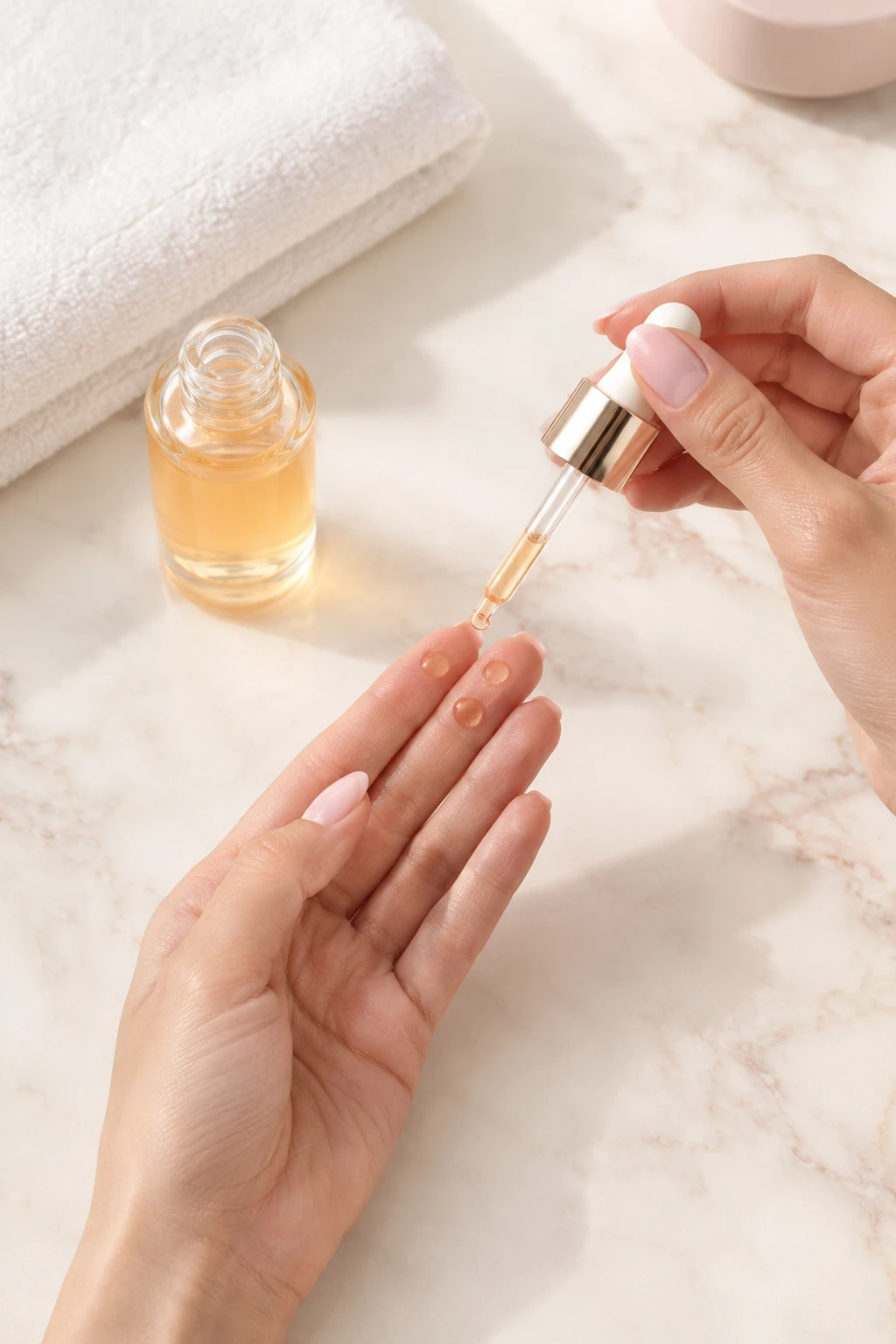
Start with the amount recommended on the product label. For many face serums, around 2 to 4 drops is a practical starting point, although the dispenser and formula can change how much you need.
Spread a thin, even layer over the face using clean fingertips. Avoid the eyelids, corners of the eyes, lips, and any broken or irritated areas unless the product is specifically intended for those areas.
You do not need to rub vigorously or keep adding drops until your face feels wet. More product does not necessarily mean better results.
Step 4: Let the serum settle
Allow the serum to absorb or settle before applying the next product. The necessary time depends on the formula, so follow the label if it provides specific instructions.
There is no universal requirement to wait exactly 30 or 60 seconds. The practical goal is to avoid disturbing the serum or causing your next product to pill.
If your face still feels very wet or sticky, give it a little longer.
Step 5: Apply moisturizer
Use a moisturizer that matches your skin type.
- Dry skin: Look for a moisturizer that helps reduce moisture loss and leaves your skin comfortable.
- Oily skin: Try a lightweight lotion or gel moisturizer if heavier creams feel uncomfortable.
- Sensitive skin: A simple, fragrance-free moisturizer may be easier to tolerate.
Moisturizer helps support the skin barrier and can reduce dryness associated with some active skincare products.
Step 6: Apply broad-spectrum sunscreen
Sunscreen is the final skincare step in your morning routine, before makeup. Choose broad-spectrum SPF 30 or higher and follow its directions for application and reapplication.
Vitamin C serum does not replace sunscreen. If your goal is to improve uneven tone or dark spots, protecting your skin from ultraviolet exposure is particularly important.
When outdoors, reapply sunscreen according to its label, especially after swimming, sweating, or towel-drying. You do not need to reapply vitamin C serum every time you reapply sunscreen.
Step 7: Extend the routine to your neck, chest, and hands if appropriate
You can consider applying a suitable facial vitamin C serum to your neck, upper chest, or backs of your hands if the product label permits it and your skin tolerates it.
These areas receive environmental exposure, but their skin can have different needs from facial skin. Start with a small amount, avoid irritated areas, and moisturize as needed.
Apply sunscreen to exposed areas during the day. Do not use a facial serum on the neck, chest, or hands if the manufacturer advises against it.
Where does vitamin C fit in your full morning routine?
The usual order is:
- Cleanser
- Vitamin C serum
- Other compatible treatment serums, if needed
- Moisturizer
- Broad-spectrum sunscreen
- Makeup, if worn
For more detail about where vitamin C sits in your full morning routine, see our skincare layering guide.
Your First 4 Weeks: A Beginner Onboarding Calendar
Starting slowly makes it easier to spot irritation and work out whether a product suits you. You do not need to use vitamin C daily from the first morning.
The following calendar is a flexible example for someone who has passed a patch test and whose skin tolerates the product. It is not a schedule everyone must follow.
| Week | Suggested frequency | What to focus on |
|---|---|---|
| Week 1 | 2 to 3 mornings, spaced apart | Learn the application order and monitor your skin. |
| Week 2 | Every other morning, if comfortable | Check for dryness, redness, stinging, or new irritation. |
| Week 3 | Continue every other morning or increase gradually | Increase frequency only if your skin remains comfortable. |
| Week 4 | Daily use if well tolerated, or maintain a lower frequency | Keep the routine consistent without forcing daily use. |
How to follow the calendar
Week 1: Keep everything simple. Use your usual gentle cleanser, the new vitamin C serum, moisturizer, and sunscreen. Avoid introducing several other active ingredients at the same time.
Week 2: Check how your skin responds. If your skin feels comfortable, try using the serum every other morning. If you notice persistent redness or irritation, stop rather than increasing frequency.
Week 3: Adjust to your tolerance. You can remain at two or three uses per week if that is what your skin handles comfortably. Daily use is not a requirement for every formula or every person.
Week 4: Choose a sustainable routine. If your skin is comfortable with alternate-day use, you may try daily application when the label allows it. If irritation appears, reduce or stop use instead.
If you experience ongoing irritation, do not try to complete the calendar. Stop the product and seek professional advice if symptoms persist.
Remember: the four-week schedule is a guide to gradual introduction, not a promise that your skin will show visible results by the end of the month.
Should You Use Vitamin C Serum in the Morning or at Night?
Vitamin C serum can be used in the morning or at night, depending on the product instructions and your routine. For beginners, morning use is a practical starting point because it fits naturally with moisturizer and sunscreen.
| Morning use | Night use |
|---|---|
| Easy to combine with daytime sunscreen | Useful if the morning routine is already crowded |
| Fits a simple cleanse, serum, moisturizer, SPF routine | Can be easier to coordinate with other morning products |
| Works well as a consistent daily habit if tolerated | Also reasonable if the product label permits nighttime use |
There is no universal rule that vitamin C only works in the morning. The most suitable time is the one that fits the manufacturer’s directions and your skin’s tolerance.
For this beginner routine, start in the morning and keep the rest of your routine simple. If you already use prescription treatments or several strong active products at night, do not change everything at once.
What if your skin becomes dry in winter?
Cold weather, indoor heating, and frequent washing can contribute to dryness. If your skin feels tight or flaky, reduce irritating products and prioritize a comfortable moisturizer.
Our guide to adjusting this routine when skin is dry in winter explains how to keep a simple skincare routine comfortable in colder months.
What Can You Use With Vitamin C Serum, and What Should You Separate?
Vitamin C can fit into a routine with several other skincare ingredients. Knowing how to use vitamin C serum also means knowing what to pair it with and what to keep apart. However, using many active ingredients together can make irritation harder to prevent and identify.
The best approach for a beginner is to keep the routine simple and introduce new products one at a time.
| Ingredient | Can you combine it with vitamin C? | Beginner advice |
|---|---|---|
| Hyaluronic acid | Generally yes | Helps hydrate the skin. Apply in the order recommended by the product labels. |
| Niacinamide | Generally yes | These ingredients can be used in the same routine if both formulas are tolerated. |
| Vitamin E | Often yes | Some formulas combine vitamin C and vitamin E as antioxidants. |
| Ferulic acid | Often yes | It is included in some vitamin C formulations to support formula stability and antioxidant performance. |
| Retinol | Potentially, but irritation is possible | Consider using retinol at night and vitamin C in the morning while learning how your skin responds. |
| AHAs and BHAs | Potentially, but irritation is possible | Introduce exfoliating acids separately rather than starting several actives together. |
| Benzoyl peroxide | Use caution, particularly with L-ascorbic acid | Ask a dermatologist or pharmacist about your specific products and routine before combining them. |
Vitamin C and niacinamide
You may have heard that niacinamide and vitamin C cannot be used together. This is an oversimplification. Modern skincare formulas can contain both ingredients, and many people can use them in the same routine.
If your skin is sensitive, introducing them separately can make it easier to identify which product causes a reaction.
Vitamin C and retinol
Both ingredients may be useful in skincare, but combining multiple active products can increase irritation for some people.
A beginner-friendly option is to use vitamin C in the morning and retinol at night, if both are suitable for you and their labels permit this routine. If you use prescription retinoids or have a skin condition, follow your clinician’s advice.
Vitamin C and exfoliating acids
Ingredients such as glycolic acid, lactic acid, and salicylic acid can be useful for particular skin concerns. However, starting vitamin C alongside frequent exfoliation may leave your skin irritated.
You do not automatically need to avoid these ingredients forever. Instead, introduce one product at a time and consider alternating application days until you know what your skin tolerates.
Vitamin C and benzoyl peroxide
Benzoyl peroxide is used in acne care. It can also affect the stability of some ingredients, including L-ascorbic acid, depending on the formulation and how the products are used.
Do not assume that every combination is incompatible. If you use benzoyl peroxide for acne, check the instructions for your specific products or ask a pharmacist or dermatologist about the best application schedule.
Troubleshooting: What If Vitamin C Serum Irritates Your Skin or Stops Working?
A serum that stings, pills under makeup, or appears less effective does not always mean the product is defective. The cause may be application technique, formula compatibility, irritation, storage, or unrealistic expectations.
Problem 1: My skin tingles after applying vitamin C
A mild, brief sensation can occur with some formulas, especially acidic ones. However, tingling is not necessary for a serum to work.
Use this simple decision rule:
- Brief, mild sensation with no visible reaction: Monitor your skin and follow the label.
- Persistent stinging or burning: Wash the product off if needed and stop using it.
- Redness, swelling, itching, blistering, or worsening discomfort: Stop using the product. Seek medical advice if symptoms are significant or do not settle.
Do not treat burning as proof that the serum is effective. Avoid applying it to broken skin or skin already irritated by exfoliants.
Problem 2: My serum pills under moisturizer or makeup
Pilling happens when skincare forms small rolls or flakes on the surface rather than layering smoothly.
Possible reasons include applying too much product, rubbing layers together, or using formulas that do not layer well.
Try these adjustments:
- Use less serum, following the label.
- Allow the serum to settle before applying moisturizer.
- Gently spread each product instead of rubbing aggressively.
- Let moisturizer settle before applying sunscreen or makeup.
- Check whether the product instructions recommend a different application order.
You do not need to wait a fixed number of minutes between every layer. Use enough time for the products to settle comfortably.
Under makeup: Keep your morning routine simple, apply sunscreen properly, and allow it to set according to its instructions before makeup. If pilling continues, try a different compatible moisturizer or sunscreen rather than skipping sun protection.
Problem 3: I have breakouts after starting vitamin C
Breakouts can have several causes, including irritation, a reaction to another ingredient, changes to your routine, or an unrelated skin issue.
Do not automatically assume that your skin is purging. Vitamin C is not expected to cause a necessary purging phase for everyone.
Stop the new serum if you develop a rash, persistent irritation, or a clear worsening of symptoms. If breakouts continue, consult a dermatologist rather than adding more active products.
Problem 4: My vitamin C serum seems to have stopped working
Before buying a stronger formula, work through this checklist.
- Has the product changed colour? Check the manufacturer’s guidance on oxidation and replacement.
- Are you using it consistently? Irregular use makes it harder to judge its effect.
- Are you using sunscreen? Sun exposure can contribute to the appearance of dark spots.
- Are you expecting results too quickly? Changes in pigmentation and skin texture can take weeks or months.
- Has your routine become irritating? Too many active products can make your skin uncomfortable and force you to stop using the serum.
- Has the product passed its recommended use period? Check the expiry date and period-after-opening symbol, where provided.
If the product appears unchanged but you see no improvement, the formula may not suit your particular concern. A higher concentration is not automatically the answer.
Persistent or changing pigmentation should be assessed by a healthcare professional, especially if a spot changes in size, shape, or colour.
How to Store Vitamin C Serum and Recognize Oxidation
Vitamin C can be sensitive to air, light, and heat, depending on its form and formulation. Poor storage may reduce a product’s stability and performance.

How to store vitamin C serum properly
- Keep the bottle tightly closed after each use.
- Store it according to the manufacturer’s instructions.
- Keep it away from direct sunlight, hot windowsills, radiators, and other heat sources.
- Avoid leaving it in a hot car or luggage exposed to high temperatures.
- Do not leave the bottle open while completing the rest of your skincare routine.
For travel, keep the serum in a cool, shaded place and avoid prolonged exposure to heat. If you are travelling somewhere hot, do not assume that a bathroom shelf, suitcase, or car is a suitable storage location.
Does vitamin C serum turn orange or brown when it oxidizes?
Some vitamin C formulas, particularly those containing L-ascorbic acid, can darken as they oxidize. A noticeable change from a pale colour to deep yellow, orange, or brown can be a warning sign.
However, colour alone is not a reliable test for every formula. Some products naturally have a tint, and different vitamin C derivatives behave differently.
Check the manufacturer’s instructions for the expected colour, storage requirements, and replacement guidance. If the serum has changed substantially, smells unusual, or is causing new irritation, stop using it until you have checked the product information.
Should you refrigerate vitamin C serum?
Not every vitamin C serum needs refrigeration. Some products may benefit from cooler storage, while others are designed to remain stable at normal room temperature within the manufacturer’s stated range.
Follow the label rather than assuming that refrigeration is always better. Avoid freezing the product or exposing it to repeated temperature changes unless the manufacturer specifically recommends the storage method.
How long does an opened bottle last?
There is no single reliable lifespan for every vitamin C serum. It depends on the formula, packaging, storage conditions, and manufacturer’s testing.
Look for the expiry date and the period-after-opening symbol, which may show a small open jar with a number of months. If no clear guidance is available, consult the manufacturer rather than guessing.
Beginner Shopping Checklist: What to Look for Before Buying
You do not need the most expensive serum on the shelf. A useful product is one with clear ingredient information, suitable packaging, realistic claims, and instructions you can follow.
Use this checklist before buying.
- The vitamin C form is clearly listed in the ingredient information.
- The product explains its concentration if the manufacturer provides one.
- The packaging protects the formula appropriately from light and air.
- The bottle has clear storage and application instructions.
- The expiry date and period-after-opening guidance are available where applicable.
- The formula suits your skin type and current routine.
- The manufacturer provides a reliable contact method and product information.
- The product does not promise instant results or guaranteed removal of all dark spots.
Red flags to consider
Be cautious if a product has no clear ingredient list, no usable instructions, questionable seller information, or exaggerated claims such as erasing every wrinkle in a few days.
A clear or transparent bottle is not automatically bad. Some formulas are designed to remain stable in particular packaging. However, light-sensitive formulas generally need suitable protection, so packaging should match the product’s stability requirements.
Fragrance is not automatically harmful to everyone, but heavily fragranced products may be less comfortable for people with sensitive skin.
Budget vs premium vitamin C serum: what is the difference?
A higher price does not guarantee a better result. Cost can reflect the formulation, packaging, research, manufacturing, brand positioning, and other business factors.
| What to compare | Budget option | Premium option |
|---|---|---|
| Ingredient information | Should list the vitamin C form and concentration clearly | Usually lists the full formula in detail, including the vitamin C form used |
| Packaging | Simple dropper bottles are common; check that the bottle is opaque or amber and closes tightly | Airless pumps or opaque, sealed packaging are more common, which helps limit air and light exposure |
| Stability information | Basic storage guidance on the label | Often more detail on stability testing and shelf life after opening |
| Added ingredients | Usually a simple formula with few extras | More likely to include supporting antioxidants such as vitamin E or ferulic acid |
| Value for money | Can be good if the product suits your needs | Worth considering if the formula offers benefits relevant to you, such as packaging that keeps it stable longer |
Choose based on the formula, packaging, your skin’s tolerance, and whether you can afford to use it consistently. Neither a low price nor a premium label proves that a serum is effective.
How Long Does Vitamin C Serum Take to Show Results?
Vitamin C serum does not work on the same timeline for everyone. The type of formula, consistency of use, skin concern, and sun exposure all affect what you notice.
Here is a realistic guide to what you might notice.
| Approximate timeframe | What you may notice |
|---|---|
| First few days | You can assess how comfortable the formula feels, but visible improvement is not guaranteed. |
| Around 2 to 4 weeks | Some people may notice a fresher or brighter appearance, although results vary. |
| Around 4 to 8 weeks | Changes in uneven tone may become more noticeable for some users. |
| Around 8 to 12 weeks or longer | Some dark spots may show gradual improvement with consistent use and sun protection. |
| Several months | Changes related to skin texture or firmness may take longer and are less predictable. |
These are approximate observation windows, not guaranteed deadlines. The evidence and expected timeline vary by formulation and skin concern. Not every serum has been tested to demonstrate improvements across all these outcomes.
Results for glow, dark spots, and firmness are different
For brighter-looking skin: Changes in overall appearance may be noticed sooner than changes in established pigmentation, but even early results are not guaranteed.
For dark spots: Pigmentation often takes longer to improve. The cause of the pigmentation matters, and some conditions need specific treatment. Sunscreen helps limit further UV-related darkening.
For firmness: Vitamin C has a role in collagen production, but that does not mean every topical serum will visibly tighten skin. Avoid expecting dramatic lifting or wrinkle removal from a cosmetic serum alone.
Take a baseline photograph in consistent lighting if you want to compare changes over time. Avoid judging your skin under different lighting conditions or after changing several products at once.
If you develop new or changing dark spots, seek medical assessment rather than relying only on skincare.
FAQs
How do you use vitamin C serum step by step for beginners?
Cleanse your face, pat it dry, apply the amount recommended on the serum label, allow it to settle, and apply moisturizer. Finish with broad-spectrum SPF 30 or higher. Start two or three mornings per week if your skin tolerates the product.
Should vitamin C serum go on wet or dry skin?
For beginners, dry skin is a sensible starting point, especially with potentially irritating L-ascorbic acid formulas. Some products may recommend damp skin, so follow the manufacturer’s instructions.
How many drops of vitamin C serum should I use?
Many face serums require around 2 to 4 drops, but the right amount depends on the product and dispenser. Follow the label and aim for a thin, even layer rather than applying extra product.
Do I apply vitamin C serum before or after moisturizer?
Apply vitamin C serum before moisturizer in a typical morning routine. Let it settle before the next layer if necessary, then finish your skincare routine with sunscreen.
Should I use vitamin C serum in the morning or at night?
Either may be suitable if the product instructions allow it. Morning use is a practical choice for beginners because it fits easily into a cleanser, serum, moisturizer, and sunscreen routine.
How often should a beginner use vitamin C serum?
When you are learning how to use vitamin C serum, start with two or three mornings per week, then increase gradually if your skin remains comfortable and the product instructions permit it. Daily use is optional if a lower frequency suits your skin better.
What percentage of vitamin C should a beginner start with?
A formula around 5% to 10% may be a reasonable starting point for many beginners, but the ideal concentration depends on the vitamin C form, full formulation, and skin tolerance. Higher percentages are not automatically more effective for you.
How long does it take to see results from vitamin C serum?
Some people notice a brighter appearance within a few weeks, while dark spots may take several weeks to months to improve. Results vary, and consistent use with sunscreen is more useful than expecting a fixed deadline.
Conclusion
Learning how to use vitamin C serum does not require an expensive product collection or a complicated skincare routine. Start with a suitable formula, patch-test it, apply it to clean skin, moisturize, and finish with sunscreen.
Introduce the serum gradually over your first four weeks, paying attention to your skin rather than following a rigid schedule. If you experience persistent burning, redness, or other signs of irritation, stop using it instead of trying to push through.
Most importantly, choose a formula that suits your skin and budget. A comfortable, consistent routine is more practical than a strong product you cannot tolerate.